


Marker Cruise 10 Bindings
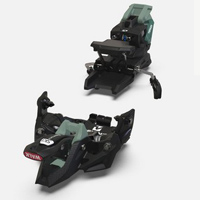
The new Marker Cruise 10 Bindings which were released last year, are filling a previous void in the Marker Binding line up. Marker's Alpinist Bindings were designed for the weight-watching backcountry skier, while Marker’s Kingpin Bindings serve the skier who wants to ski the resort and backcountry with the same unabashed enthusiasm. The Cruise is a combination of these two bindings, which sits directly in the middle as far as capability and weight. Unlike the Alpinist, the Cruise has fully adjustable release settings along with two aggressive heel risers. While the Cruise does share the same toe piece from the Alpinist and Kingpin bindings, it has a much lighter, yet still capable heel piece when compared to the Kingpin’s. It uses quite a different design from that of the alpine-style heel found on the Kingpin and weighs just 475g per binding (including brakes), 145g less than the more burly Kingpin’s, but 140 g more than the minimal alpinist.
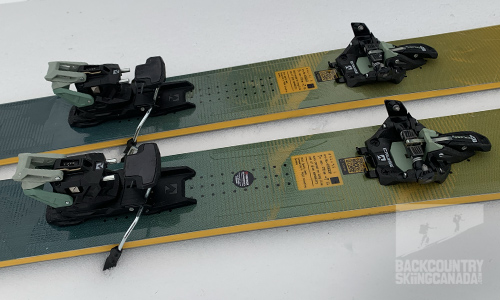
- SHOW THE REST OF THE REVIEW / PHOTOS / VIDEOS
-
The new Cruise 10 alpine touring bindings continue with Marker’s eco-conscious mandate and are made with greener, bio-based, recycled plastics, which have an improved environmental footprint and reduce waste at the same time. These more sustainable materials are used for components that are under less stress, with the component’s geometries has been specially designed for the properties of recycled plastic to ensure no loss of safety or performance. This allows Marker to reduce carbon emissions compared to the previous binding that used conventional manufacturing processes and materials.
You will notice that the Cruise 10 Bindings use Marker’s tried-and-true ISI toe piece that is also found on the Alpinist and Kingpin Bindings. It's intuitive step-in uses an integrated stop to automatically position and align your boot. Once you step down, there is a firm and reassuring click that requires a noticeably reduced effort to engage. The double springs combined with a higher pivot point of 3° for the arms, creating a much stronger closure force than most tech binding and the toe pieces' wide platform allows the Cruise 10 Bindings to drive wider skis.
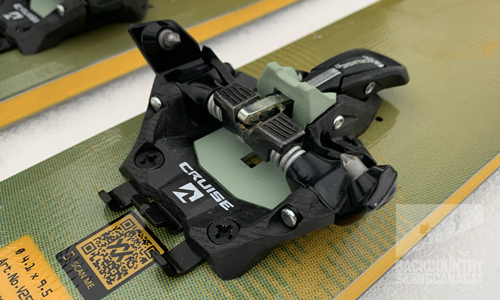

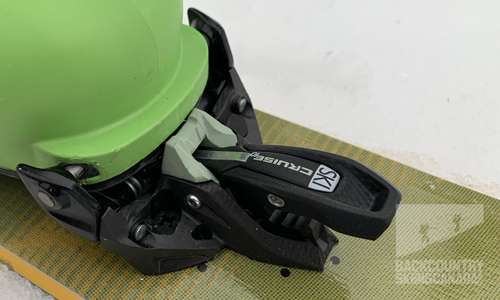

The ergonomic design of the heel piece allows them to be easily rotated 180° with a single hand to transition the bindings from ski mode to walk mode while the brakes are automatically locked into position once you step in.

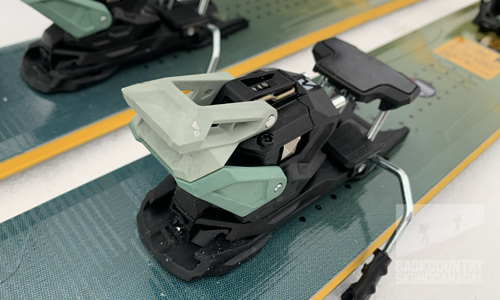
Colour-coded climbing aids can be quickly engaged to provide an incline from 0° to 8° for easier terrain and 12° for more aggressive, technical terrain.


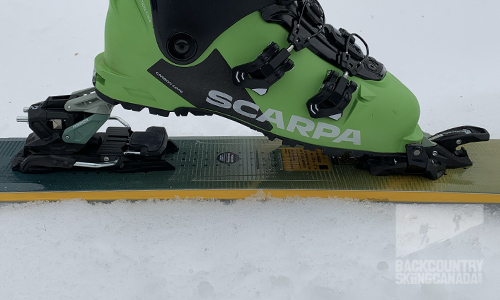
There are independent adjustments for the vertical and horizontal release values from 4-10 DIN, which further reduces the risk of a false release during descent.
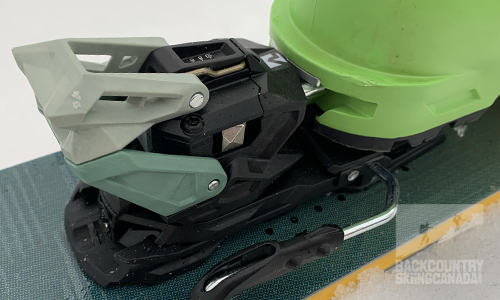
Marker’s ‘Active Length Compensation’ means that the heel piece has an elastic travel that allows the heel to move back up to 7mm when the ski is flexed. This movement helps absorb shocks and keeps the skier connected to the ski in challenging conditions, leading to a smoother ride and consistent release in a fall without unwanted pre-releases by allowing the boot to move within the binding during impacts, vibrations, or turns. Total heel adjustment on the Cruise bindings is 25mm so the binding can accommodate a large range of boot sole lengths.
The Marker Cruise 10 Bindings are a user-friendly and lightweight ski touring binding designed for intermediate to advanced skiers that want more performance than the Alpinist but with out the weight of Kingpin.Features:
- 25mm heel adjustment track means you can share the love with all the boots in your quiver.
- Gapless design creates a smooth and consistent ride.
- Vertical and lateral releases are independently adjustable.
- ISI (Intuitive Step In) toe and heel make stepping into the Cruise a breeze.
- Two heel risers are easily accessible without spinning the heel.
- Heel step-in force is about 30% less than the Alpinist.
- Made from strong, bio-based plastics.
Verdict:
I’ve been a big fan of the Marker bindings for several years now and it is why I’ve toured on the Alpinist bindings and use the Kingpin bindings for my resort days since they were released. Simply put, they perform as stated and are durable over time and are easy to use. This is why I could not wait to get my hands on their new Cruise 10 Bindings. There has been a gap in the middle ground of Marker’s binding line-up for several years now, and I am glad to see that they’ve addressed this with the Cruise Bindings. In true Marker form, they are well-designed and easy to use. By using the same ISI toe piece found on both the Alpinist and Kingpin bindings, you get a proven design that maximizes ease-of-use with light weight performance. The heel of the Cruise 10 bindings is an all new design that doesn’t add unnecessary weight while maintaining structural integrity. It’s nice to see the use of bio-based recycled plastics in strategic locations to increase Marker’s environmental footprint while minimizing their waste and carbon footprint.
The overall weight of the Cruise 10 bindings hits that sweet spot between reliable performance and light enough that you won’t bemoan them on longer days with lots of vertical. The same can be true of the two integrated risers, which provide aggressive lift for steeper skin tracks and thankfully are easy to apply and stow on the heel piece when needed. Make didn’t go micro with their design, which would sacrifice usability, but nor did they overdue their size so that they add too much additional weight.
The downhill performance of the Cruise 10 Bindings is more confidence-inspiring than their Alpinist bindings, thanks to their added weight and bulk but they’re thankfully much lighter than the more free ride-touring inspired Kingpins for obvious reasons.
If you’re looking for one binding that will do it all and allow you to confidently charge hard at the ski resort without weighing you down on the skin track, then the Cruise 10 is the one you’re looking for. For those of us who have individual setups for touring and resort skiing, the Marker Alpinist and Kingpin Bindings are the ones to get.
In order to test the Marker Cruise 10 Bindings, I mounted them on the 2026 Volkl Blaze 104 Skis as they make a dynamic duo of lightweight, fun and responsive skiing. Be sure to read that review of the 2026 Volkl Blaze 104 Skis over here.
 |
PROS:
|
 |
CONS:
|
SPECS:
Price: $649.99CAN / $595.99US
Brake Widths: 90 / 105mm
Bindings Boot Sole Range: 243 mm - 387 mm
Din/ISO Range: DIN 4.0 - 10.0
Risers: 0° / 8° / 12°
Weight: 475g / 16.75oz (per binding)
Ski/hike performance 2/2
Transition 1.5/2
Durability 1.5/2
Weight 2/2
Quality / Price 1.5/2

Did we miss something? Are we totally out to lunch? Let us know what you think. People like/dislike gear for different reasons so chime in below and we'll get a well-rounded evaluation. You'll need to login or register before you can comment but it only takes a few seconds, then you're good to go.
Leave a Comment: