

• Weekly avalanche conditions report
    Weekly Episode

    Avalanche Conditions Report

    Weekly snowpack summary covering Rogers Pass, the Selkirks and the Canadian Rockies. Published every Friday throughout the season.

    Listen Now →

    Weekly avalanche & safety updates throughout the season

  • BSC Guide Books
    Proprietary Content

    BSC Guide Books & Maps

    Researched and written by our team. Printed guides and georeferenced digital maps for Canada's best backcountry terrain.

    Shop the Store →

    Printed guides + georeferenced digital maps — all authored by BSC

  • BSC Membership

    Access 300+
    Full Routes

    Subscribe to Backcountry Skiing Canada and unlock complete route descriptions, trailhead details, approach beta, seasonal conditions and linked digital maps — for every route we've documented across Western Canada.

    • 300+ full route descriptions with trailheads, approach notes and descent options
    • Georeferenced digital maps — Gaia GPS and CalTopo compatible
    • ATES-rated and updated each season with current conditions beta
    • Support independent backcountry skiing content since 2009
    Subscribe to BSC Browse free content →

    Route details also available in BSC printed guidebooks

  • Know Before You Go

    Check Today's Forecast

    Real-time avalanche danger ratings updated daily by Avalanche Canada. Always check before heading out.

    View Forecast →

    Avalanche awareness saves lives

  • Know Before You Go

    Check Today's Forecast

    Real-time avalanche danger ratings updated daily by Avalanche Canada. Always check before heading out.

    View Forecast →

    240+ videos — gear reviews, conditions reports & backcountry edits

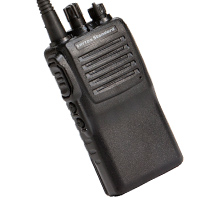
Vertex Standard VX-231 VHF Radio - REVIEW

  • Online
    2012-09-02 20:30:03

    Vertex Standard VX-231 VHF Radio"Transceiver, probe, shovel" is the mantra most backcountry skiers preach prior to any ski tour. What happens though after you locate, pin-point and dig out the subject?

    If you have trauma or incapacitating injuries then your first aid training will come into play but this will only help stabilize the situation - you'll need professional help and fast. Many people never think beyond the relief of finding the buried person; a fact that is exacerbated by the reality that most training scenarios end once you find the subject, then all is well. Sadly, in real life this is not often the case. According to statistics and snow science guru Pascal Haegeli, trauma causes as many as a third of all avalanche fatalities. So once you dig out the subject, you need communication with the outside world and you need it to be reliable.


    Plenty more to read in the full review on our Gear Review Pages.

  • 2012-09-03 22:50:22

    what kind of range would you get with this type of radio?  A lot of my trips are wihtin the national parks where you're often a long way form any potential radio traffic.  
  • Online
    2012-09-03 23:01:55

    Hey 2wheeler, our testing showed some pretty good results for distance but we typically used them in a base camp or group hiking scenario. The sound quality was excellent but I hear what you are saying about the range to rescue services, best to plan ahead and know what ridge you need to be on to get a signal to the park wardens. 

    The offficial word for disctance is as follows, and remeber "height is might"!

    clear and flat - 6km

    urban - 5km

    woods - 5km

    heavily vegitated - 3km


    Let me know if you have more questions about the product as we are always happy to help.

    Admin.

  • 2012-10-22 23:45:14

    admin said:

    …best to plan ahead and know what ridge you need to be on to get a signal to the park wardens. 


    It's not just about being on the right ridge, it's also about knowing the right frequencies for any repeaters in the area and, in some cases, the privacy codes to access them.  A little pre-trip rersearch can make the difference between contacting someone, or not.

    One comment about the review, it mentions nothing about licensing.  Technically, the VX-231 radio (as opposed to the user) must be licensed by Industry Canada to operate on specific commerical VHF frequencies.  Practically speaking, if you're just using it to communicate within a group while out in the mountains, no one is going to care, but if you're in an area with lots of commercial radio traffic (e.g. a heli or cat skiing tenure) and you're interfering with their communications, someone may get upset.  Again, it's best to get in touch with anyone you think you might want to communicate with ahead of time and find out if they will mind letting you use their frequencies (with the appropriate license).

    Depending on where you are, an amateur (aka "HAM") VHF/UHF radio may be more useful than a commercial one.  There are lots of amateur repeaters scattered around the country, and most are open to the public.  Amateur radios are also much more user configurable (hundreds of channels, not just 16) than, and just as tough as, commercial radios.  The catch is that you need an amateur radio license, but most people with any technical inclination can easily pass the multiple choice test with a relatively minor amount of studying.

    Cyril Shokoples has a great emergency communications article on his website.

  • 2012-10-23 06:17:36

    Excellent info, thanks for filling in those blanks. I have  radio but jsut for group safety out of anyones terrain but always wanted to know how that all worked.