


• Weekly avalanche conditions report
    Weekly Episode

    Avalanche Conditions Report

    Weekly snowpack summary covering Rogers Pass, the Selkirks and the Canadian Rockies. Published every Friday throughout the season.

    Listen Now →

    Weekly avalanche & safety updates throughout the season

  • BSC Guide Books
    Proprietary Content

    BSC Guide Books & Maps

    Researched and written by our team. Printed guides and georeferenced digital maps for Canada's best backcountry terrain.

    Shop the Store →

    Printed guides + georeferenced digital maps — all authored by BSC

  • BSC Membership

    Access 300+
    Full Routes

    Subscribe to Backcountry Skiing Canada and unlock complete route descriptions, trailhead details, approach beta, seasonal conditions and linked digital maps — for every route we've documented across Western Canada.

    • 300+ full route descriptions with trailheads, approach notes and descent options
    • Georeferenced digital maps — Gaia GPS and CalTopo compatible
    • ATES-rated and updated each season with current conditions beta
    • Support independent backcountry skiing content since 2009
    Subscribe to BSC Browse free content →

    Route details also available in BSC printed guidebooks

  • Know Before You Go

    Check Today's Forecast

    Real-time avalanche danger ratings updated daily by Avalanche Canada. Always check before heading out.

    View Forecast →

    Avalanche awareness saves lives

  • Know Before You Go

    Check Today's Forecast

    Real-time avalanche danger ratings updated daily by Avalanche Canada. Always check before heading out.

    View Forecast →

    240+ videos — gear reviews, conditions reports & backcountry edits

LOGIN

Cornice! what cornice?

  • 2012-10-17 14:20:26

    This image says so much and is a great reminder of the dangers of a Cornice when out in the backcountry this coming season.
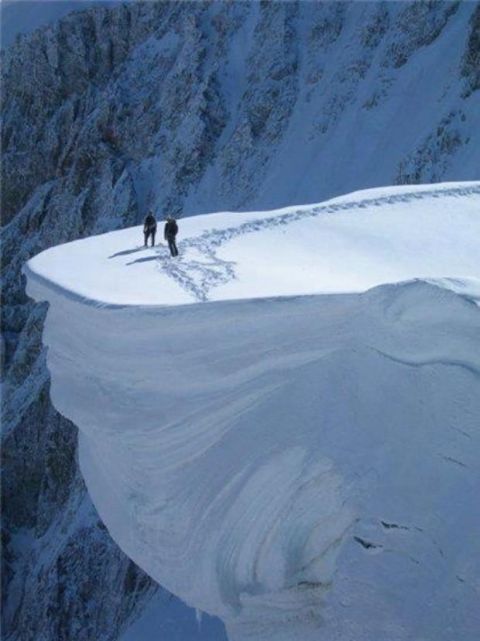
    backcountry skiing cornice safety


    The Canadian Avalanche Association has this great info to remind everyone:

    Cornice falls are caused when a mass of wind-deposited snow that is often overhanging and near a sharp terrain break, such as a ridge, detaches. For cornices to form there must be snow falling during the wind event or there must be loose surface snow available for transport. They typically develop most quickly during or shortly after relatively warm storms with moderate, steady winds when snow is easily moved and highly prone to cohesion. They also form but to a lesser extent in colder conditions, when dryer snow is being transported, when older snow is being transported, and with stronger more variable winds.


    They are most common on the leeward side of exposed ridges at higher elevations but can form anywhere that wind moves snow across terrain and a reasonably sharp terrain break exists (e.g. ridges, pronounced convexities with steep slopes below). Signs of wind transport in the surrounding area are an indication that cornice formation may have occurred where the right terrain exists. On exposed ridgecrests the transition from thin, rocky snow cover to more uniform, deeper snow is sign that you are leaving the safety of terra firma and are moving closer to or stepping onto a cornice.


    Cornice falls are most common during or shortly after formation of a cornice, before bonds between grains have become strong enough to hold the mass of snow in place. Large cornices on steep terrain or overhanging cornices with little or no support below are more persistent in nature and can fail long after they have formed and after extended periods inactivity.