Tranceivers
What is the best transceiver these days and which is best relative to cost? In the market for another one but not sure what to buy?

BACKCOUNTRY NEWS AND FORUMS
Welcome to your source for the latest news, conditions, and insights on backcountry skiing and adventuring. Explore reports, gear reviews, safety tips, and more to help you make the most of your time in the wild.
If you sign up as a member this is your chance to tell everyone about everything and anything to do with backcountry skiing. Follow the simple steps to register and WHAMMY, you’re in. If you are pulling your hair out with frustration, have a look at the help forums for answers or take a pause and drop us an email at: info (at) backcountryskiingcanada.com. We’ll do our best to help out as soon as we can (but all bets are off on a powder day, obviously).
Tranceivers
-
 2009-12-03 16:28:11
-
 2009-12-04 12:49:32I'm very happy with my BCA Tracker. It's idiot-
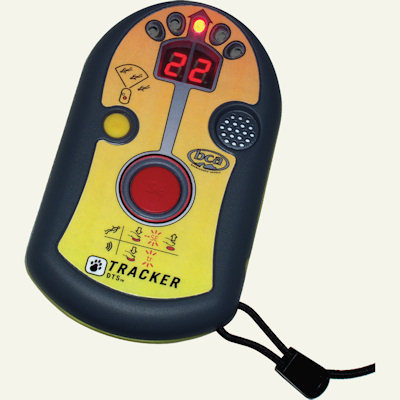 proof and not too $$$. Not the best on multiple burials but otherwsie, I'd recommend it. No, this is not a paid endorsement
-
2009-12-06 20:34:19good old Ortovox F1 is the cheepest as far as I know. And still has the longest range 80M. I have had mine for years and trust it. Some friends that I ride with have pieps DPS. The have some great features for multiple body search. And seem pretty easy to operate. but only 50m range.
-
 2009-12-09 16:59:54
Ski Canada just published the latest transceiver test results - worth a read, very informative if you are in the market for a new one or just want to know how your old clunker stacks up?
-
 2009-12-09 18:12:10
splitboard rider said:good old Ortovox F1 is the cheepest as far as I know. And still has the longest range 80M. I have had mine for years and trust it. Some friends that I ride with have pieps DPS. The have some great features for multiple body search. And seem pretty easy to operate. but only 50m range.
Read below an excerpt from an email I just got:
AIARE is recommending that everyone start carrying a digital beacon because most analog beacons are now 5-10 years old and most probably starting to wander off their frequency making them less effective at searching or being found.
In the latest Canadian transceiver test the search times for all of the newer digital beacons were within a few seconds of each other. Beacons tested included the Ortovox D3 and S1, the Pieps DTS, Tracker DTS, and Mammut Pulse. Results published in the newest edition of the Avalanche Review.
-
2009-12-09 21:17:27
I hear ya' - I have the Orthovox X1 and is it fool proof and idiot proof, just don't run around too fast so the processor can do it's job and all is well. Solid, easy to use and reliable - too many fancy-pants gadgets on the new ones for me. Not even sure how to turn some of them off when you need to after a multiple person burial, this is something that should be standard throughout?
-
 2009-12-11 00:27:54
Here is the full article from Ski Canada:
TRANSCEIVER TEST 2010The Canadian Ski Patrol System and Canadian Ski Guide Association
compare the new three-antenna avalanche beacons with existing technology.
by F.M.Swangard MD, Bob Sayer, Steve GundersonABSTRACT AND INTRODUCTION
The minimal safety equipment a person must have in the backcountry in winter is a
transceiver, probe and shovel. Clearly, nothing replaces the transceiver when a person is
caught in an avalanche and the shortest time taken to extricate a buried person, the better
his chances of survival. The chances of a live rescue fall quickly after 15 minutes. In the
winter of 2008-09, 24 people died in avalanches in Canada, with 144 deaths over
the last 10 years. B.C. had the largest number of fatalities.There has been a great deal of change since the last transceiver test was presented by the Canadian Ski Patrol System in 1999. Transceivers now have a different technical construction and as a result there have been profound modifications in how they are used. As well, some have extra features that may improve finding a buried person.
We tested the most common five new transceivers used in B.C. against the Ortovox F1, an older, single antenna transceiver, which is most commonly used in the province. We first tested the transceivers with 15 certified mountain guides who use the Ortovox F1 in their workplace. Each guide used all six transceivers in a simulated avalanche. The times to find the two buried transmitters were recorded. We then performed the same test with 15 high school students who had never used transceivers. The novice high school students were divided into three groups, each of which used the transceivers in a different sequence to
rule out a learning advantage by using the transceivers in the same order.MATERIALS AND METHODS
Four transceivers were received from Mammut (Pulse) and Pieps (DSP). Mountain Equipment Co-op loaned the test group four Tracker DTS units. Ortovox sent four d3 and four S1 transceivers.Four Ortovox F1 transceivers were loaned from the Canadian Ski Patrol System, Greater
Vancouver Zone. The Ortovox remote-controlled test system (five transmitters that can be remotely turned on and off) was loaned by Mike Wiegele Helicopter Skiing at Blue River, B.C.The first session took place at Mike Wiegele's using the heli-ski guides as "knowledgeable" testers. These guides and their clients currently use the Ortovox F1. We created a simulated avalanche 30 by 50 metres in size and buried the transmitters across the run-out area. The manufacturers' instructions for each transceiver were given to each tester prior to use. We randomly turned on two of the five Ortovox transmitters then let each tester (guide) enter at the top end of the "avalanche" to start a search grid until a signal was received, at which time he was to follow the instructions from the applicable transceiver
manufacturer. The time was measured from the entry until finding the second transmitter. Two different test transmitters were switched on for every test.The second session took place at Hemlock Resort near Mission, B.C. We again created a simulated avalanche of the same size and buried the five Ortovox test transmitters across the run-out area. Fifteen "naive" users were divided into three groups and each group had a different sequence of transceivers to test, whereby the use of the first transceivers could lead to improved times with other test transceivers. Using the transceiver manufacturers' instructions, the groups were given a 30-minute instruction course with practice prior to the testing. The same test program was used as with the guides. A time limit of seven minutes was set to find the second transmitter. If this was not achieved, the test was declared "not found."
RESULTS
In the hands of a knowledgeable user, there was only a small difference in search times
between the two-antenna and the newer three-antenna transceivers. All expert testers noted that with all the newer digital transceivers, it's important to slow down and reduce lateral movement since the searcher can move faster than the processor can process. In the hands of an expert user there appears to be little difference in the results using the multiantenna transceivers and all are faster than the F1, which is nearing two decades of use.The results from the naive users proved more interesting. Six out of 10 testers failed to find
the two targets using the Ortovox F1 in the allotted time. All of them did much better using
the two- and three-antenna transceivers. The fastest was the Ortovox S1 (2:59 minutes), then the Ortovox d3 (3:21), Mammut (3:25), Tracker (3:26) and Pieps (3:34).DISCUSSION
 Both the knowledgeable guides and naive users liked the ease of use and the marking of multiple burials on the screen of the Ortovox S1. The screen didn't seem to be affected by the cold (at times -15C to -20C) as well.
The Ortovox d3 was easy to use but not as easy to find multiple burials as the S1. Both the S1 and d3 had the best attachment systems.
 The Mammut Pulse worked well, when correctly set up. It seemed to have too many parameters to set however and testers thought it needed a lock function to stop a desired setting from being changed. [Editor's note: Mammut Pulse units tested did not include a firmware upgrade that is now on all models and also available to existing Mammut Pulse owners. "Basic" and "Advanced" modes were developed, says the company, to address complication-of-use concerns by some casual users.] We also feel that the "Pulse" feature, designed to detect a buried victim's heartbeat, should be tested separately. The attachment system is good.
 The Pieps DSP worked well, but the onoff slider switch, which sticks out from the transceiver, seemed to present a risk of being broken. We also found the deactivation of a
transmitting beacon with the special probe (for use in a multi-burial scenario once a victim is located) required a thorough understanding. The attachment system was not as easy to use as the others. The Tracker DTS did better than we expected as a two-antenna transceiver being compared to three-antenna models. The pinpointing with this transceiver was more difficult than with a three-antenna transceiver. However, at field demonstrations in Europe this September, the pinpointing speed of BCA's new three-antenna Tracker2 was very impressive. As well, the existing attachment system has been much improved.
CONCLUSIONS
The new three-antenna transceivers are faster at finding a buried person in an avalanche than the older single-antenna transceivers—especially for naïve users. Guides or guiding companies using anything other than three-antenna transceivers should consider upgrading.The simpler the transceiver is to use, the better. Extra functions such as the pulse detection with the Mammut and it is our opinion the probe switch with the Pieps may detract from the primary goal of rescuing the buried person.
The "Test Box" for the Ortovox S1 appears to be a good way to assure full function of each
S1 transceiver prior to its use. This would be especially useful for -operations such as heli and snowcat operators and rescue organizations.REMEMBER!
Check first with the Canadian Avalanche Centre (CAC) at http://www.avalanche.ca or your regional avalanche information service as to the avalanche danger level; if it's high, don't
go in to avalanche terrain. When going into a park area, check with the Park Ranger's office
as to the risk of avalanches and file a trip plan. Make sure every person in your group knows how to use his or her transceiver and agree on a rescue plan. Know how to check
the snow conditions as you travel along your route. When not enjoying the backcountry,
practice transceiver use with others frequently.
source: Canadian Avalanche Centre
THE AUTHORS
* SWANGARD; Canadian Ski Patrol System, Life Member; Canadian Delegate to the International Commission of Alpine Rescue.
* SAYER; President, Canadian Ski Guide Association; Associate Delegate, International Commission of Alpine Rescue.
* GUNDERSON; Member and Board Member, Canadian Ski Patrol System, Greater Vancouver Zone and Avalanche training offi cer, B.C.