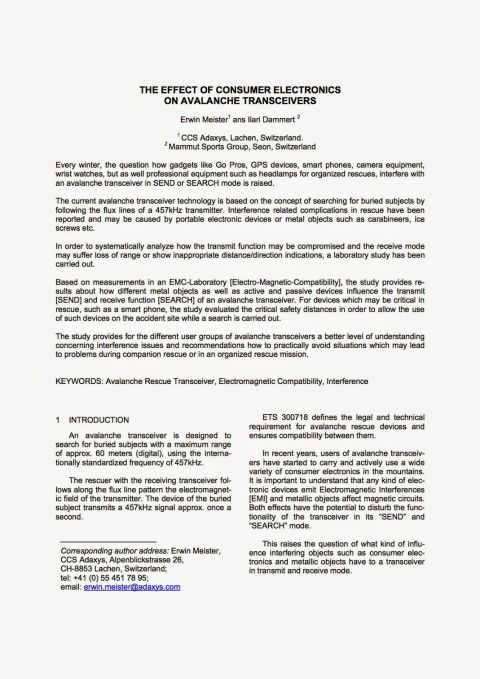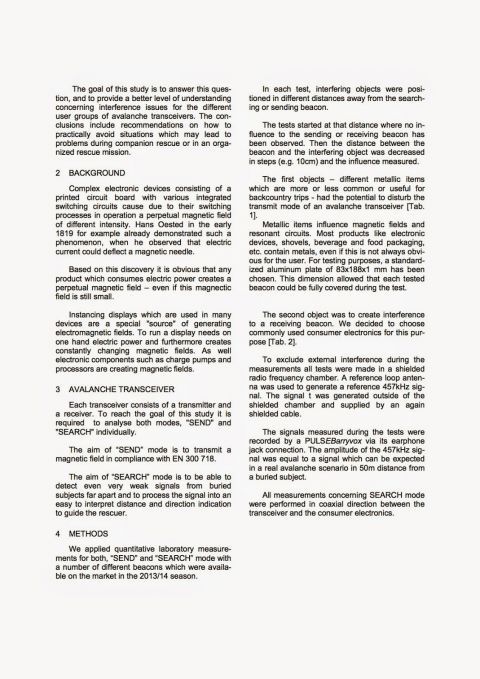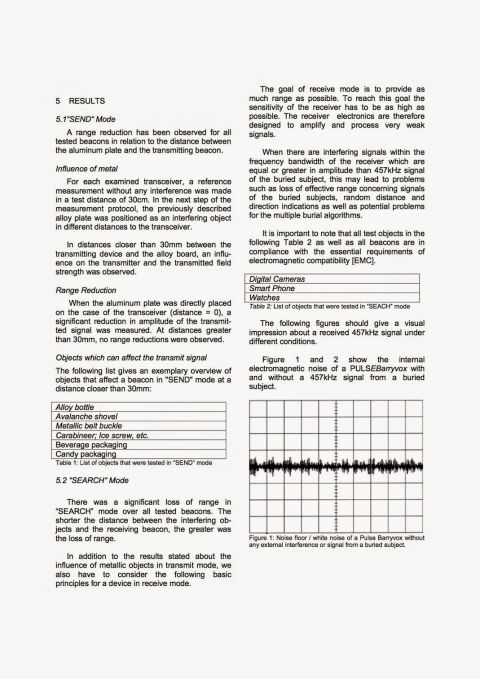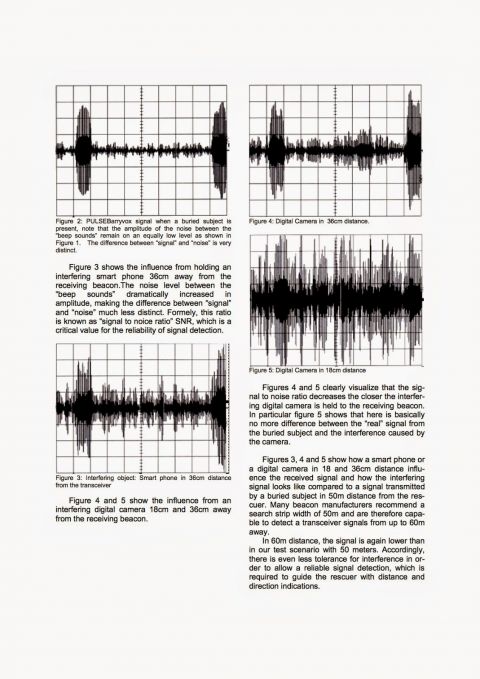





An interesting read about the effects of electronic devices on your transceiver, the full paper can be found at the end for those interested in all the technical data. Thanks to Mammut for putting this out there, enjoy…
In the past few years, there has been a growing concern in the avalanche rescue community that consumer electronics interfere with avalanche transceivers ability to function properly. We have always known that metal objects like shovel blades or even foil wrappers can create electrical interference, but today just about every backcountry traveller is equipped with GO PROs, iPhones, VHF radios and other high frequency gadgets.
In an effort to further our understanding of this important topic, Ilari Dammert (Mammut Electronics Product Manager) and Erwin Meister (Project Manager CCS Adaxys) teamed up to explore the issue.
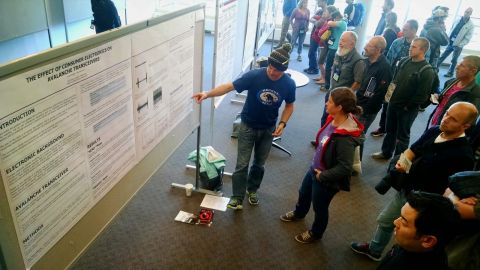
I have published the full paper below. For those less likely to read the entire paper, some excerpts are included here. The short and simple is that electrical interference is a real potential problem in rescue scenarios. Extraneous electronic equipment must be turned off during a beacon search to facilitate a "clean" working environment. When traveling in avalanche terrain be sure to place high frequency electronics as far from your beacon as possible–while 3 centimetres proved adequate in laboratory testing, we recommend a minimum of 20 cm in order to have a reasonable margin of safety regardless of the position of burial). In SEARCH MODE your beacon is far more prone to interference and a 50cm buffer is recommended.
Please note: "Airplane Mode" on a smartphone does NOT reduce the electromagnetic field sufficiently. Phones need to be OFF or at a distance greater than the respective recommended distances.
EXCERPTS:
SEND MODE:
When the aluminum plate was directly placed on the case of the transceiver (distance = 0), a significant reduction in amplitude of the transmit- ted signal was measured. At distances greater than 30mm, no range reductions were observed.
SEARCH MODE:
"Based on the results and great variety of potentially interfering objects, it is not possible to give one final recommendation in terms of minimum distance for “SEARCH” mode.
As a general recommendation for a search, hold the device at least a minimum of 50cm away from interfering objects and turn off any electronic devices, if possible. It is highly recommended in this case to turn off mobile phones!
The full paper for those who are interested: