


Norrona Lyngen Ski Touring Collection
In Europe, Norrøna is a well-known outdoor apparel brand thanks to its Norwegian roots. Here in North America, its reputation is rapidly growing. Founded in 1929 by Jørgen Jørgensen, the company began by crafting durable outdoor equipment and clothing for harsh Scandinavian conditions. To this day, it remains a family-owned business (now in its fourth generation) renowned for technical innovation, functional design, and exceptional quality.
A standout subset of their offering is the Lyngen collection—designed for freeride-driven ski touring and built around the principles of light weight, durability, packability, and performance. Developed for high-output activities, the system includes breathable, waterproof, and windproof layers made with materials such as GORE-TEX® and Polartec® Alpha® to maximize comfort and protection in backcountry conditions.
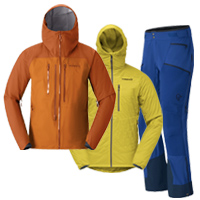
For the ultimate backcountry ski touring setup, I combined the Lyngen Gore-Tex Jacket, Lyngen Alpha100 Zip Hood, and Lyngen Flex1 Light Pants. This system pairs a minimal waterproof shell with a breathable, insulated Polartec Alpha midlayer and softshell pants. Norrøna claims that the Lyngen line “pushes the limits of durable lightweight.” Below are my thoughts after putting that claim to the test.
- SHOW THE REST OF THE REVIEW / PHOTOS / VIDEOS
-
Norrona Lyngen Gore-Tex Jacket
The Lyngen Gore-Tex Jacket is Norrøna’s lightest waterproof 3-layer shell, purpose-built for ski touring, trekking, and lightweight mountaineering. It uses a zonal construction that strategically combines two types of Gore-Tex fabric for optimal function: a more robust 28,000 mm waterproof/breathable Gore-Tex on the hood, shoulders, and sleeves for high-exposure areas, and a 30-denier, 3-layer ePE Gore-Tex C-knit fabric on the rest of the jacket. The latter uses a 100% recycled nylon face and backer for comfort and sustainability, with a breathability rating (RET) below 13.
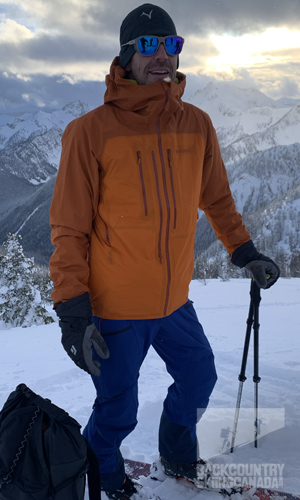
The jacket has a technical fit, with a slightly elongated back for extra protection and articulated arms for mobility during climbs and descents. Despite its ultralight design, it retains a full feature set without unnecessary extras.
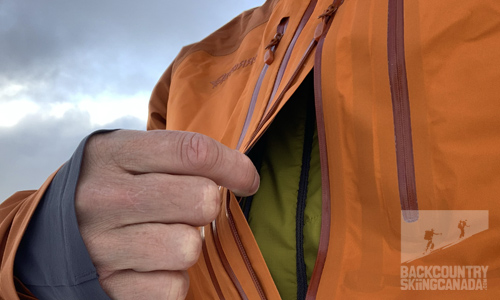
Highlights include a helmet-compatible storm hood with one-hand adjustment, asymmetric Velcro cuffs with integrated stretch gaiters, large zippered chest pockets with mesh lining for ventilation, and a water-resistant YKK chest vent zipper that doubles as access to the internal pocket. One internal zippered pocket is ideal for valuables.
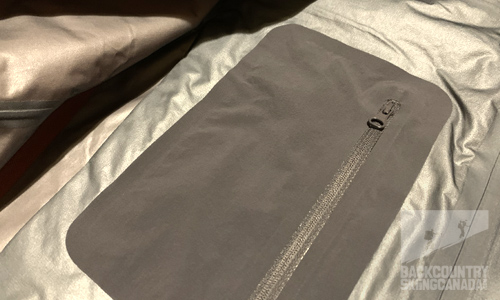 There are two chest pockets of differing sizes with mesh linings, perfect for increasing breathability when not in use.
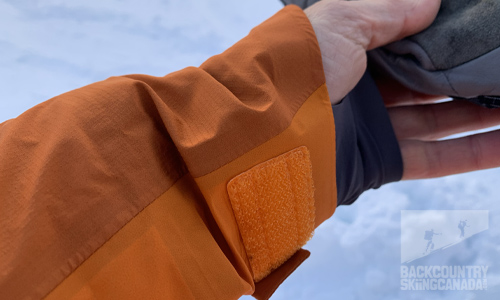
 The cuffs are symmetric with velcro adjustment and inner laminated stretch woven hand gaiters to keep warmth in and snow out.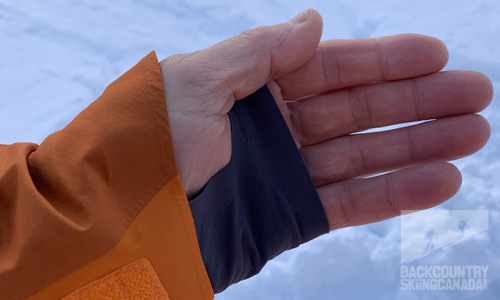
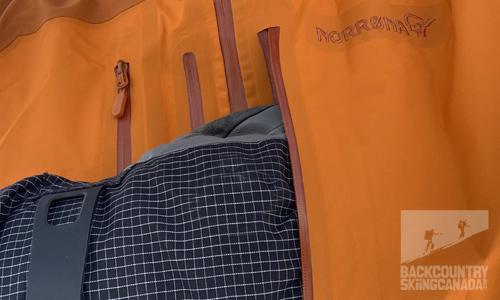
There is a large chest ventilation opening on the chest with a YKK water-resistant zipper that also provides access to the inner zippered pocket inside on the opposing side.
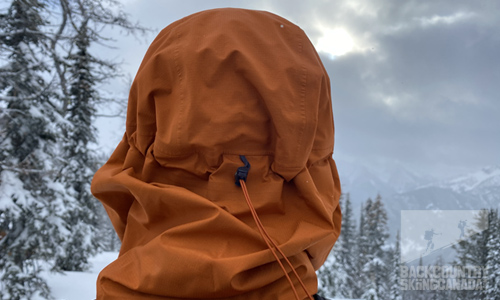
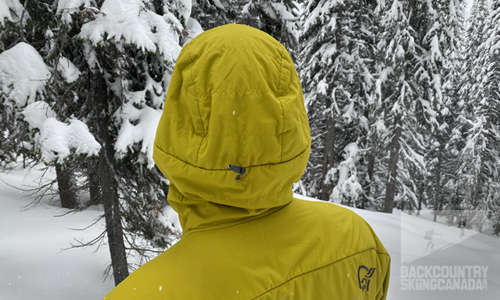
 The helmet-compatible storm hood features a built-in wire brim, which holds its shape and provides a better view. The adjustable back cinch tightens to keep the weather out.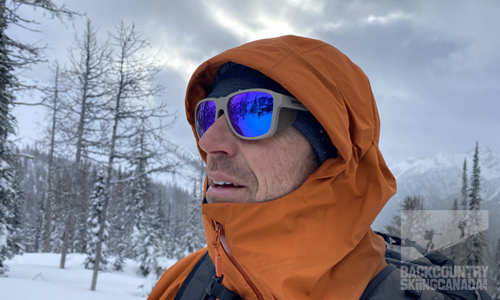
Features:
- Helmet-compatible storm hood with one-hand adjustment
- Asymmetric cuffs with Velcro closure
- Integrated hand gaiters
- Articulated elbows
- Longer back cut for extra protection
- Water-resistant front chest ventilation
- Internal chest pocket
- Reinforced shoulders
- Adjustable hem
- Exterior hang loop
Materials:
- GORE-TEX® 3L, 28,000 mm waterproof rating
- Windproof, highly breathable
- Over 50% recycled fibers
- Oeko-Tex® and bluesign® certified
Norrona Lyngen Alpha 100 Zip Hood
The Lyngen Alpha100 Zip Hood is Norrøna’s most breathable insulation jacket, striking a balance between warmth, wind resistance, and packability. Designed as a midlayer or outer layer for high-intensity winter pursuits, it features a lightweight aero100 nylon shell with a PFC-free DWR for water resistance. Inside, Polartec Alpha insulation provides consistent warmth while efficiently releasing excess body heat and moisture.
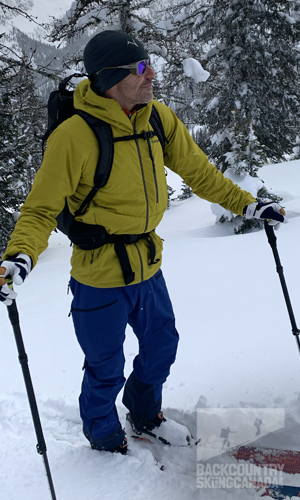
Body-mapped construction ensures warmth where it’s needed most—Polartec Alpha 120 (120 g/m²) insulation at the shoulders resists compression from backpack straps, while Polartec Alpha 90 (90 g/m²) elsewhere maintains breathability and flexibility.
Features include zippered hand and chest pockets, a helmet-compatible hood with one-hand adjustment, a stiffer brim for wind protection, and an elastic hem to seal out drafts. The articulated arms and tailored fit enhance mobility for active use.
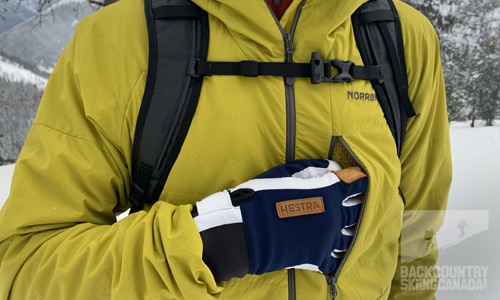
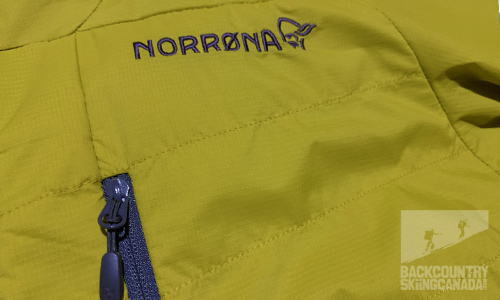 Large zippered hand pockets as well as a chest pocket provide lots of storage for items you need close at hand.
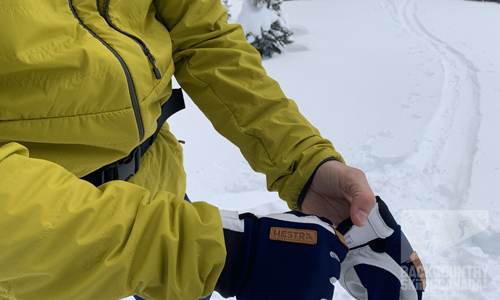
 You’ll find an elastic hem on the cuffs and around the waist to help keep drafts and snow out.
 With excellent breathability and insulation properties (thanks to Polartec Alpha), the Lyngen Alpha 100 Zip Hood is ideally suited to mid to high-intensity activities where a lightweight, compatible insulation is required.
 The Helmet-compatible hood has a one-hand adjustment and a sturdy brim to customize the fit and maximize comfort and performance.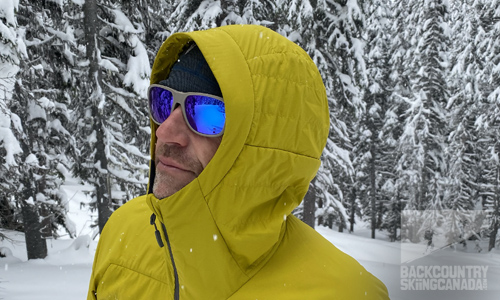
Features:
- Body-mapped Polartec Alpha insulation
- Articulated elbows
- Helmet-compatible hood with one-hand adjustment
- Elastic hem and curved cut
- Zippered hand and chest pockets
- Packable design with an inner hang loop
- Offset seams and chin guard
Materials:
- Polartec® Alpha® 90/120 insulation
- Over 50% recycled fibers
- Oeko-Tex® certified
- PFC-free DWR
Norrona Lyngen Flex1 Light Pants
The Lyngen Flex1 Light Pants are lightweight softshell trousers engineered for ski touring, mountaineering, and hiking. Made from Norrøna’s flex1 fabric, they offer a balance of windproofing, breathability, and stretch—ideal for physically demanding days in mixed alpine conditions.
The main body consists of 86% recycled nylon and 14% elastane, reinforced at the thighs and knees with an extra-durable double-weave blend (69% recycled nylon, 19% recycled polyester, 12% elastane). The laminated hem is both windproof and waterproof, providing extra protection in deep snow.
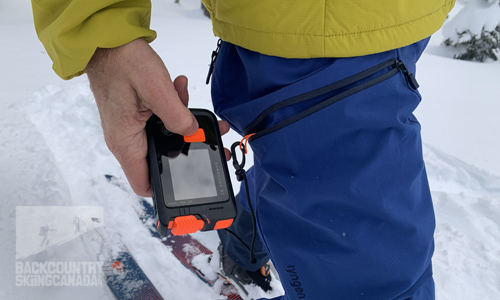
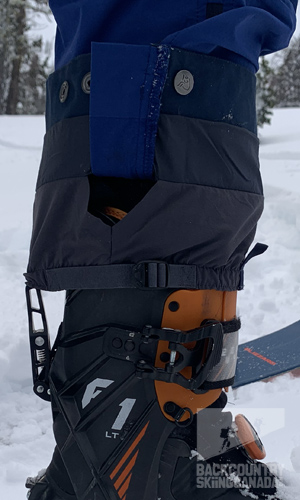
They feature Norrøna’s Custom-Fit Waist system for personalized adjustment, rear thigh vents for heat release, multiple pockets for organization, and adjustable snow gaiters that accommodate both ski and hiking boots. There are two strategically placed thigh pockets and one tool pocket, which offer plenty of storage but sadly no built-in loop for attaching a transceiver (so I sewed one in).
 Stretchy adjustable snow gaiters are found at the bottom of each leg, complete with adjustable snaps so that you can customize their width depending on whether you are wearing ski boots or hiking boots.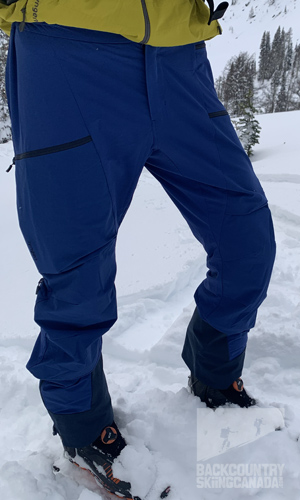
Features:
- Custom-Fit Waist System
- Back/side thigh vents
- Two thigh pockets and one tool pocket
- Elastic snow gaiters
- Reinforced knees and hems
Materials:
- flex1—stretchy, windproof, breathable softshell
- Over 50% recycled fibers
- Oeko-Tex® and bluesign® certified
- PFC-free DWR
Verdict:
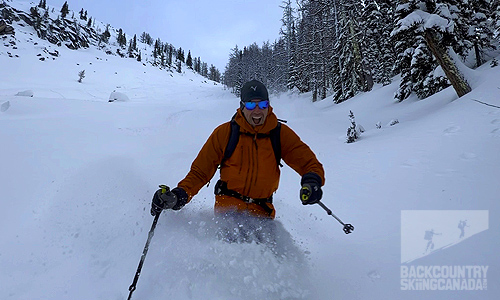
After 25 years of backcountry skiing, I’ve learned that the optimal touring kit doesn’t revolve around heavy shells and a down jacket. While GORE-TEX® fabrics are excellent for protection, I prefer a waterproof jacket paired with breathable softshell pants. Your lower body does the bulk of the work while ski touring and generates a considerable amount of heat during climbs, so softshell pants like the Lyngen Flex1 Light provide better comfort and temperature regulation than hardshells.
While softshell pants are my go-to, I still like to have the protection of a hardshell waterproof/breathable jacket and this is why I chose the Lyngen Gore-Tex Jacket. It will stand up to some abuse that you might encounter skiing the trees and keep you warm by eliminating any wind that typically blows on summits and ridge tops. Not all waterproof/breathable jackets are created equally, however. You want one that packs down as small as possible, as this is one part of your ski touring kit that will spend 99% of the time in your pack. This is where the Lyngen Gore-Tex Jacket excels; it uses a very thin yet durable fabric and has all the features you want without adding any additional bulk. It has pit zips, huge pockets, a helmet-compatible hood, and my favourite—integrated hand gaiters on the cuffs.
This is a true backcountry skiing shell, light, packable, full-featured and durable. The only change I would make to this jacket is to have two interior stash pockets to store my skins or thin gloves that I wear on the skin track to keep them warm when not in use. For the upper body, the Lyngen Gore-Tex Jacket excels as a lightweight, packable, backcountry-ready shell.
The Lyngen Alpha100 Zip Hood complements the shell perfectly, not only is the Lyngen Alpha100 Zip Hood incredibly soft, comfortable and warm, but it has a very generous cut so that it keeps any weather out and all the warmth in. While this is appreciated on colder days, I found that it can be a little too warm to wear on the skin track most days and also doesn’t pack down as much as it could. It is a fine balance between warmth and breathability, and for some, the Lyngen alpha100 Zip Hood will be just what they need but for me personally, I found that while it breathed well, I would have liked to see more zonal mapping of the Alpha insulation. Specifically, less insulation on the back of the jacket, as this is where your backpack is, and this creates a lot of heat buildup and eventually sweat. If you run cold, then the Lyngen Alpha 100 Zip Hood will be your new best friend, and you’ll never take it off. For those of us who run on the warmer side, you might find it overkill on warmer days.
The Flex1 Light Pants deliver an outstanding range of motion, breathability, and wind protection for their weight. When paired with merino base layers, they are extra warm for those colder days. Their only drawback is a slight material sag over time, given how lightweight they are, but overall performance is excellent. A sew-in loop would be a nice addition so that you can secure a transceiver in the thigh pocket.
Bottom line: if you’re looking to upgrade your ski touring kit, consider combining softshell pants with a hardshell jacket and a solid midlayer from Norrøna’s Lyngen line. The pieces are thoughtfully designed, perform as intended, and can make your backcountry skiing days more comfortable and efficient.
 |
PROS:
|
 |
CONS:
|
SPECS:
Norrona Lyngen Gore-Tex Jacket
Price: $780CAN / $599US
Sizes: S, M, L, XL
Colours: Golden Palm, Skydiver, Exuberance
Weight: 362g / 12.7
Norrona Lyngen alpha100 Zip Hood
Price: $450CAN / $349US
Sizes: S, M, L, XL
Colours: Antique Moss, Exuberance, Indigo Night
Weight: 380g / 13.4oz
Norrona Lyngen Flex1 Light Pants
Price: $360CAN / $289US
Sizes: S, M, L, XL
Colours: Limoges, Gold Flame, Caviar Black
Weight: 470g / 16.6oz
Norrona Lyngen Gore-Tex Jacket 9/10
Fit: 2/2
Packability: 2/2
Features: 1.5/2
Waterproof/Breathability: 2/2
Quality/Price: 1.5/2
Norrona Lyngen alpha100 Zip Hood 8.5/10
Fit: 2/2
Packability: 1.5/2
Features: 2/2
Breathability/Warmth: 1.5/2
Quality/Price: 1.5/2
Norrona Lyngen Flex1 Light Pants 8.5/10
Fit: 1.5/2
Packability: 2/2
Features: 1.5/2
Breathability/Warmth: 1.5/2
Quality/Price: 2/2

Did we miss something? Are we totally out to lunch? Let us know what you think. People like/dislike gear for different reasons so chime in below and we'll get a well-rounded evaluation. You'll need to login or register before you can comment but it only takes a few seconds, then you're good to go.
Leave a Comment: