


• Weekly avalanche conditions report
    Weekly Episode

    Avalanche Conditions Report

    Weekly snowpack summary covering Rogers Pass, the Selkirks and the Canadian Rockies. Published every Friday throughout the season.

    Listen Now →

    Weekly avalanche & safety updates throughout the season

  • BSC Guide Books
    Proprietary Content

    BSC Guide Books & Maps

    Researched and written by our team. Printed guides and georeferenced digital maps for Canada's best backcountry terrain.

    Shop the Store →

    Printed guides + georeferenced digital maps — all authored by BSC

  • BSC Membership

    Access 300+
    Full Routes

    Subscribe to Backcountry Skiing Canada and unlock complete route descriptions, trailhead details, approach beta, seasonal conditions and linked digital maps — for every route we've documented across Western Canada.

    • 300+ full route descriptions with trailheads, approach notes and descent options
    • Georeferenced digital maps — Gaia GPS and CalTopo compatible
    • ATES-rated and updated each season with current conditions beta
    • Support independent backcountry skiing content since 2009
    Subscribe to BSC Browse free content →

    Route details also available in BSC printed guidebooks

  • Know Before You Go

    Check Today's Forecast

    Real-time avalanche danger ratings updated daily by Avalanche Canada. Always check before heading out.

    View Forecast →

    Avalanche awareness saves lives

  • Know Before You Go

    Check Today's Forecast

    Real-time avalanche danger ratings updated daily by Avalanche Canada. Always check before heading out.

    View Forecast →

    240+ videos — gear reviews, conditions reports & backcountry edits

LOGIN

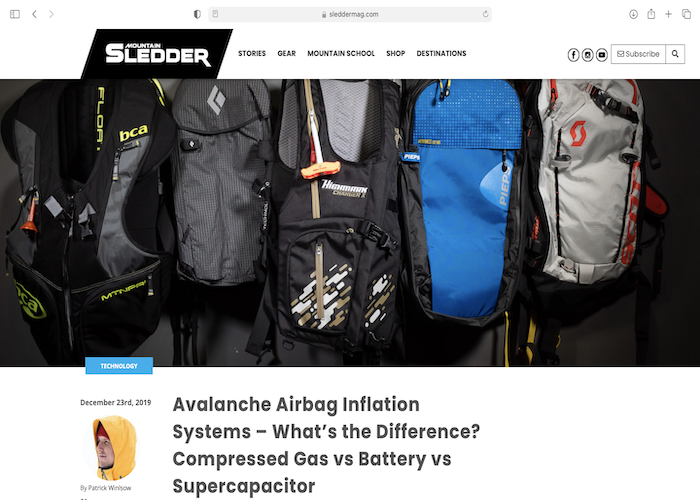
What's the Difference between Avalanche Airbags?

  • 2021-08-20 09:04:05
    There are several types of avalanche airbag inflation systems out there and a variety of brands that sell airbag packs. Mountain Sledder goes over how these systems differ and the pros and cons of each.


    All avalanche airbags use either a cylinder of compressed gas or an electronic fan inflation method. Compressed air/gas systems have been around longer than fan-based airbags and as such are more commonly used.  When the airbag is deployed, air is released from the cylinder into the airbag.  These systems use small, refillable aluminum cylinders that are filled with air between 2500 and 3000 psi. Some brands use regular oxygen and some brands use other types of gas like argon and CO2, or nitrogen.
     
    Electronic airbags must be charged and “switched on” before they’re used. When the handle is pulled, a cable tells the airbag to inflate. The power source gives energy to the fan, which pulls ambient air into the airbag.  Battery-powered fan inflation systems were the first e-airbag on the market and the supercapacitor-powered inflation system is the latest in avalanche airbag technology.
     
    Click here to learn more about the different brands that offer which airbag technology and to learn the pros and cons of them all.