




In this article, we will explore five new innovative backcountry tools that may revolutionize how we ski in the backcountry. As technology advances, designers, inventors, and out-of-the-box thinkers try to find new ways to make backcountry skiing safer and more enjoyable. Here are some exciting and promising new tools to watch out for.
5 New Innovative Backcountry Tools
- Bluebird Mountain PowderBee - Drone Avy Beacon
- PL1 - Portable Ski Lift
- AvyScanner - Digital Snow Pits
- POC Obex Backcountry Spin - Digital Helmet
- Elan Ibex Tactix - Foldable Split Skis
1) Bluebird Mountain PowderBee - Avalanche Safety for the 21st Century
There are few things worse than a buried skier trapped, helpless under the snow. They could be injured, and unless rescued quickly, they will suffocate and may die. Their life depends on being found and dug out as quickly as possible.
Today an avalanche beacon is the best tool to find a buried victim. But it still takes time to search for and find a victim, all hampered by avalanche debris. Bluebird Mountain thinks there may be a better way.
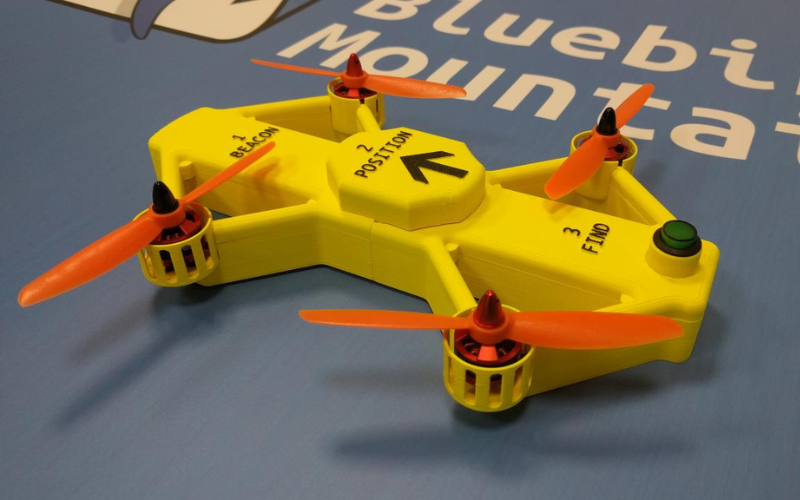
The PowderBee is a drone designed to fly over an avalanche debris field and perform a coarse search for a buried victim. When the drone has locked onto a beacon signal, it will land within a couple of meters of the signal. A rescuer then performs a fine search and locates the buried individual.
The PowderBee is still a prototype, but the idea has some merit. A drone can fly over an avalanche debris field faster than you can skin across it. If an avalanche occurs, you can deploy the drone immediately. While the drone is searching, you can switch to uphill mode. When the drone finds the victim, you can straight line it to their location instead of having to criss-cross the debris field, saving valuable time and energy.
There are a few potential drawbacks, though. First, everyone in your group would have to carry a drone. Second, how does the drone work in multiple burial scenarios? Third, the prototype does not currently have object avoidance, which only works in areas without obstacles (trees or cliffs).
Regardless of the current drawbacks, there is merit in this technology, and it will be interesting to see whether they can overcome the weaknesses. Will this change how avalanche search and rescue is performed, and could it result in a higher survival rate for victims?
2) Portable Ski Lift
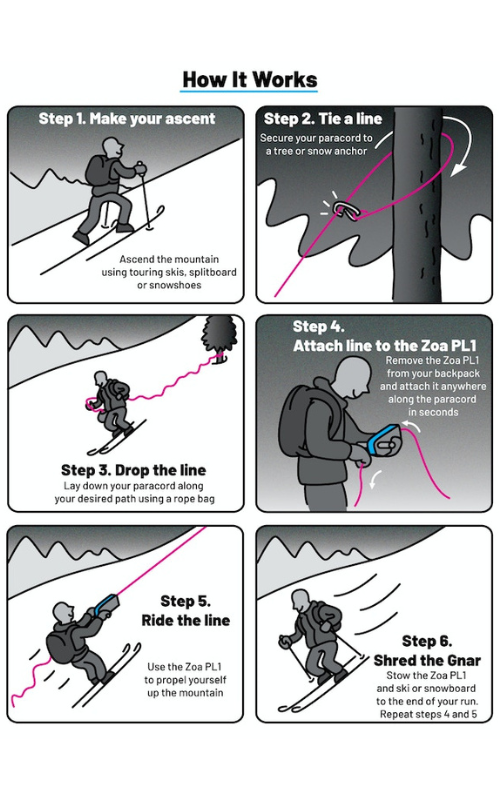
What's the most challenging part of skiing in the backcountry? Hiking up the hill. Don't earn your turns; use a portable ski lift and turn any backcountry run into your private ski hill. The PL1 uses a paracord line and an electric winch to create a lift system that will pull you up the mountain. Skin up the slope and tie the cord off to a tree. Ski down with the cord in tow and bury an anchor at the bottom to secure the line. Attach the winch to the line and press the button to get back up the hill.
It's a novel idea, and I'm sure it will rub some purists the wrong way. But it sounds like a much cheaper alternative to and less noisy than a snowmobile. Could the PL1 be the future of mechanized backcountry skiing?
3) AvyScanner - Digital Snow Pits
Snowpits have long been a tool for backcountry skiers to assess the stability of backcountry slopes. But snowpits take time and effort to dig, and often people skip them or use less accurate methods to understand the snowpack. Digging a pit only represents a single data point in a specific location. The value of the information is limited, but often, a single pit is used to make wide-scale assumptions about the overall snow conditions.
AvyScanner asks, why do you need to dig a pit at all? Geologists have been using radar for years to understand what's happening underground. Why can't that same technology be applied to understanding snow?
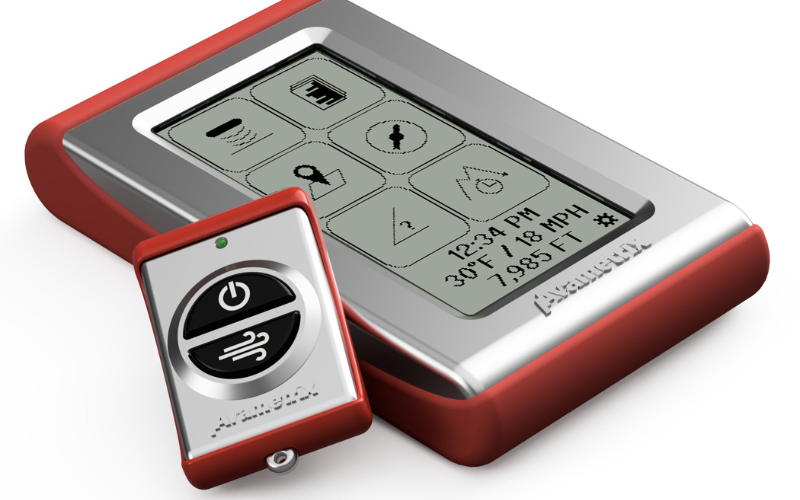
The AvyScanner is a handheld device that uses ultra-wideband radar and artificial neural network "machine learning" to scan the snowpack and identify conditions likely to produce a human-triggered avalanche.
The Avyscanner also records the location of the scan so that it can be reviewed later or shared with an online database.
The Avyscanner is still in development and is being tested and refined by backcountry rescuers and enthusiasts alike. If it proves successful, this technology could revolutionize backcountry skiing safety by providing a fast, reliable real-time way to analyze snow conditions.
4) POC Obex Backcountry Spin - A Modern-Day Helmet
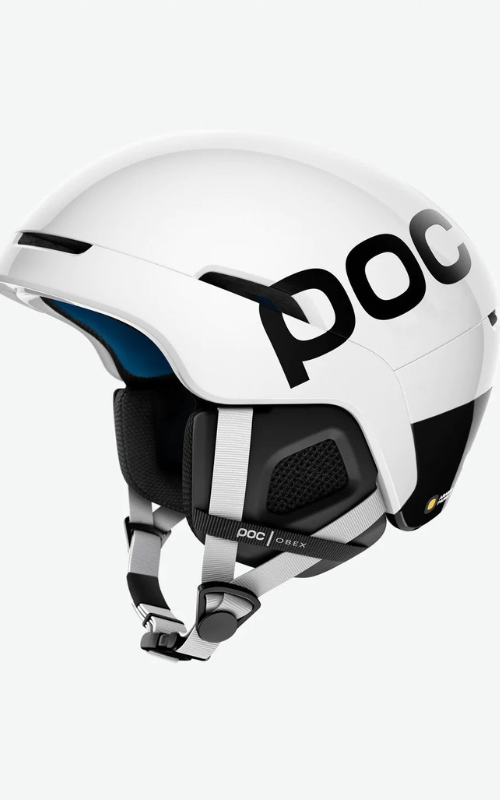
POC has been innovating its helmet design for the past couple of years. They have added an RFID chip to their helmets. The chip stores a skier or boarder's critical medical information. In the case of an accident, where the user is incapacitated, a medical responder can read the data on the RFID chip with an app and quickly see critical details that could save someone's life.
The chip is a modern-day version of a medical alert bracelet for snow sports. I like the idea, but I am concerned about people potentially scraping personal data from the chip. Despite this, I think the idea has merit.
5) Foldable Split Skis - Elan Ibex Tactix
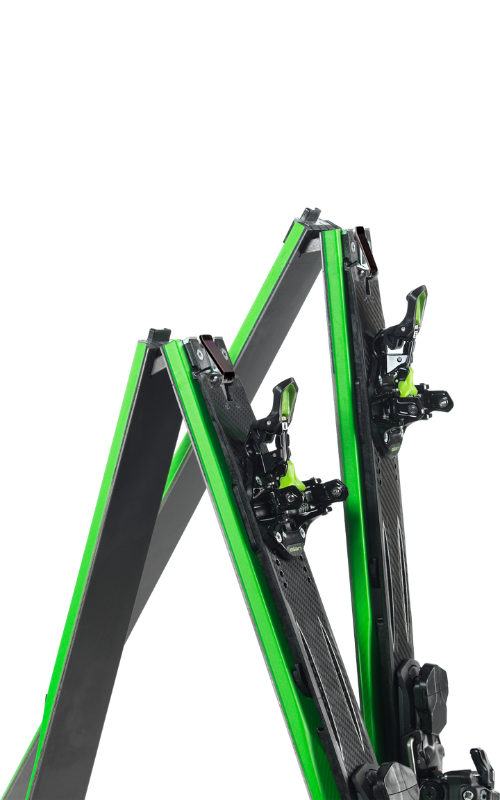
Foldable skis have been around in one form or another for years. The consensus has been that being able to fold your skis doesn't outweigh the poor performance on the slope.
Elan may have cracked the code with their new Ibex Tactix. The Ibex Tactix uses an innovative carbon fiber structure that reduces the weight of backcountry skis by 75% while maintaining strength, stiffness, and durability. The design allows backcountry skiers to easily fold up their skis for transportation or for stowing away in their backpacks when not in use.
Overall, the Ibex Tactix may have limited applications, but the improvements in the technology could have wide-ranging implications. Could the tech be somehow used with split boards? Could it be a replacement for snowshoes? Only time will tell, but backcountry skiers can now enjoy the ease, portability, and versatility of a pair of Ibex Tactix skis.
