



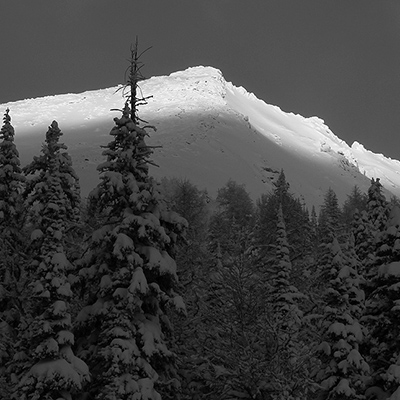
Here is the Mountain Conditions Report for the Western Monashee Mountains, North of the TCH, West of the Perry River, NE of the Gorge and Queest mtn. March 19th, 2011.
Monashee Mountains, North of the TCH, West of the Perry River, NE of the Gorge and Queest mtn. March 19th, 2011.
Snow conditions are good in this little mountain range. We have roughly average seasonal snow depths above 1500m-WAY more than average below that. Travel is either pretty crunchy or slushy below 1300m and rather laborious on foot up high. Excellent uphill ski travel everywhere and the bad downhill skiing is all about the crusts and painfully obvious.
As of yesterday afternoon, after two weeks here, we had only two main concerns.
The first was two suncrusts buried in steep south facing terrain. In this neighbourhood, very approximately, one is down about 50 cm and the other about 1m. It is still possible that some of these south facing slopes between 35 and 50 degrees have a thin layer of loose, facetted crystals on top of one or both of the suncrusts. I think it is "unlikely" these layers could be triggered by the weight of skiers or sledders in this neighbourhood, but I am absolutely certain that the consequences could be disastrous, especially in steep glades. I have left them alone for the past two weeks.
Cornices started out the winter thin and then rotted during the dry days of december. They grew slowly through january and february, but in march, with lots of snow and relatively light winds they have taken on much more height and mass on top of the december junk pile. In places I have never dealt with cornices before, in the past two weeks I have been cautiously doing all sorts of goofy mini cornice control with shovels, short bits of rope, on skis and with the odd belay. The big cornices are REALLY BIG and I swear I can hear them creaking and groaning when the temperature does a big swing up or down. Again, I have been going for the simple answer and just trying to stay out of harm's way, above and below them for now.
The suncrust will heal and be less of a concern in the near future, but I am guessing that cornices will be a valid concern in parts of the alpine till the first houseboats collide in Shuswap lake.
Meanwhile, most days, we have been skiing terrain up to 50 degree and some guests have been hucking like fools all over the rest of the tenure. We were managing or avoiding windslabs at ridge crests and as soon as we felt the storm snow was trustworthy, we were skiing steep, relatively planar Northwest, North, Northeast and East facing terrain with lots of clever ski cutting, spotting and coaching, one at a time and loving it.
The ice is still a bit thick for waterskiing on Mara Lake, but in yesterday's view from the alpine, Copper Island in Shuswap lake looked like a really nice place to go floating by.
Larry Stanier
ACMG/IFMGA Mountain Guide
