





This is a question many Avalanche Airbag owners have and it’s a good one. Since most Avalanche Airbag’s use a canister of compressed gas they are a no-no to take onto airplanes unless they are empty. If you have the fan powered Avalanche Airbags such as the Black Diamond Jetforce Airbag then you should be fine checking those as they use batteries and a fan and not compress gas canister. You can read more about those regulations and rues here.
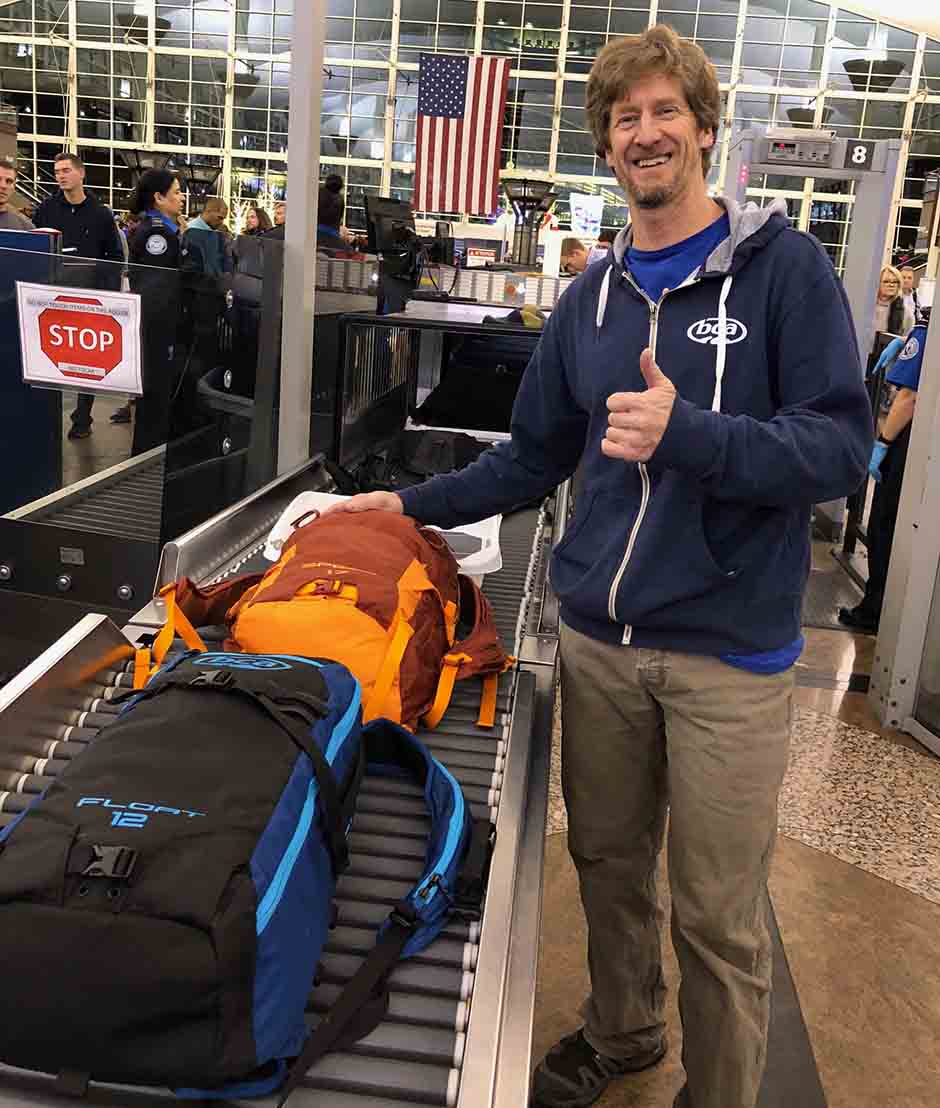
According to Bruce Edgerly, co-founder and vice president of global sales and marketing at BCA, if you follow these simple steps you’ll have no trouble travelling with your Avalanche Airbag on airplanes.
Empty It
Simply deploy the Airbag and ensure the canister is empty.
Separate the Head from the Canister
To prove to TSA that the compressed-air canisters is empty, remove the head of the canister so security can look inside the and confirm it is indeed empty.
Storing the Parts together
Put the canister and head (now that it is removed) into a plastic bag so security can give the entire thing an easy look over and ensure that they are happy.
Carry It On
Carry on the canister and the rest of the pack if you like, this way it won’t get lost in transit and you’ll be sure to have it at your destination.
Refill Once You Land
BCA has a refill centre located at every major ski resort and ski town. Don’t believe us? check out the locator here.
If you want a handy PDF of all this info you can find that on the BCA website here.
Something to know if you own an ABS branded Avalanche Airbag Pack is that these packs not only use compressed air canisters but they also have a small pyrotechnic charge in the trigger handle. This poses an added complication when travelling through security as these are not permitted.
The International Air Transport Association (IATA) has rules regarding dangerous goods, have a read over these regulations here.
(Photos courtesy of Backcountry Access)
