


How the Canadian Rockies Molded WWII's Mountain Commandos
Long before modern ski touring gear conquered the alpine, elite Allied commandos braved brutal -50°F storms in the Canadian Rockies to prepare for winter combat. Chronicled in the 1945 documentary Ordeal by Ice, these secret high-altitude trials forged both wartime survival tactics and the early roots of Canadian backcountry culture.
Every November 11, the backcountry community pauses. Before setting the season’s first skins or dropping into early-season powder in the high alpine, we reflect on the sacrifice of service members who answered the call in conflict. For those who travel on skis through the jagged peaks of Western Canada, that history hits particularly close to home. Long before modern lightweight carbon touring rigs, satellite communicators, and breathable technical shells, the unforgiving alpine zones of the Canadian Rockies served as an extreme proving ground for Allied soldiers preparing to face Axis forces in Europe’s harshest mountain theaters.
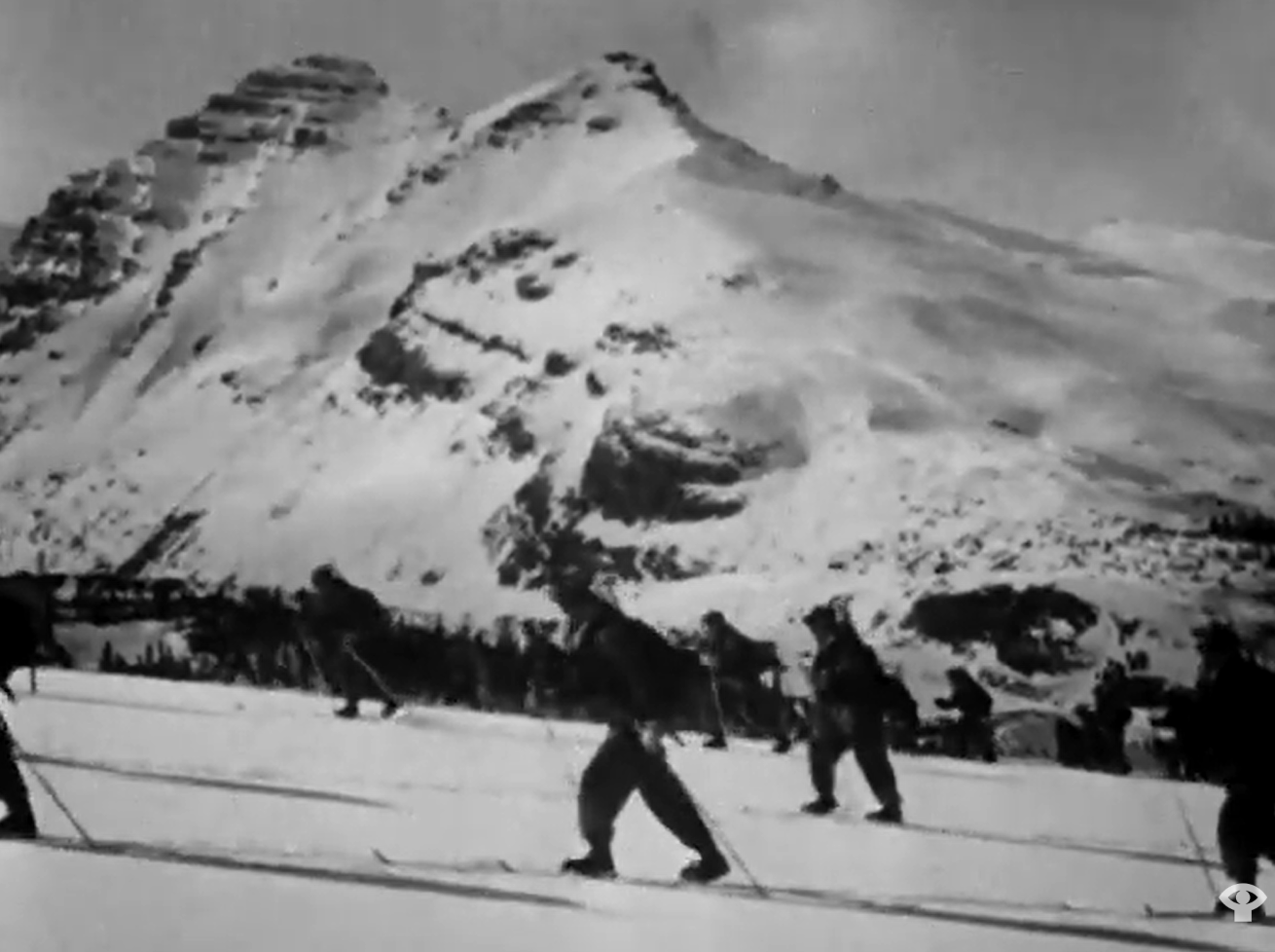
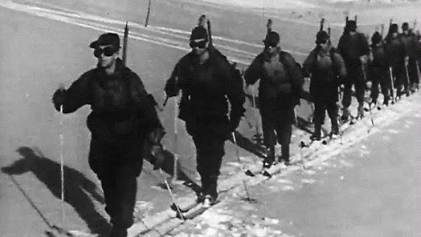
Troops skining up Columbia Glacier (Courtesy of National Film Board of Canada)
The Secret Winter Maneuvers of 1944 and 1945
In the depths of the Second World War, Allied high command recognized that reclaiming fortress Europe would require specialized soldiers capable of navigating glaciers, surviving severe blizzards, and fighting in glaciated mountain warfare. The British Army, partnering in combined operations with the Canadian Army, turned to the most rugged alpine environment available: the Canadian Rockies.
During the winters of 1944 and 1945, elite mountain commandos were deployed to remote camps across Alberta and British Columbia, including staging grounds near Jasper, Lake Louise, and the Columbia Icefield. These secret maneuvers—codenamed operations designed to test cold-weather endurance, over-snow transport, and alpine tactics—pushed soldiers and prototype winter kit to absolute extremes.
Chronicling the "Ordeal by Ice"
The brutal realities of this mountain crucible were captured in Ordeal by Ice, a landmark National Film Board of Canada (NFB) documentary short released in 1945. Directed by J.V. Durden, the film pulled back the veil on combined operations where British and Canadian soldiers faced conditions that would humble even seasoned modern mountaineers.
The documentary chronicled troops hauling heavy field gear, establishing isolated snow bivouacs, and negotiating technical terrain in temperatures that plummeted to -50°F (-45°C). Operating at those temperatures meant that skin contact with bare rifle barrels tore flesh, vehicle grease froze into solid stone, and exposed skin suffered severe frostbite within minutes. Skiing under these conditions was not about carving clean turns; it was about sheer tactical mobility and survival in alpine environments where a single miscalculation proved catastrophic.
"The mountain is an impartial adversary. In temperatures of 50 below, staying alive demands absolute discipline before a single round is ever fired."
— Historical dispatch from Allied cold-weather mountain trials, 1945
Evolution of the Skin Track
The legacy of those winter maneuvers extends directly into the DNA of Canadian backcountry skiing. The trials carried out on the icefields and high passes tested early versions of over-snow sledges, canvas wind-layering, high-altitude rations, and pack designs that eventually informed civilian mountaineering gear throughout the mid-20th century. Local Swiss-Canadian mountain guides, who knew the Rockies' snowpack and terrain traps intimately, were recruited to instruct troops in route selection, avalanche awareness, and crevasse rescue—foundational safety principles that govern today's AST (Avalanche Skills Training) curricula.
Today, as ski tourers break trail into the alpine zones of the Continental Divide, the traces of those who endured the deep freeze remain part of the landscape's story. This Remembrance Day, the Canadian backcountry community honors the resilience, fortitude, and sacrifice of those Allied commandos who braved Canada’s wildest peaks in service of peace.