


Why We’re Doubling Down on the Skin Track
Backcountry Skiing Canada
Welcome to the digital rebirth of Backcountry Skiing Canada.
As the first crisp autumn air settles over the valleys of Western Canada and high-elevation flurries begin dusting alpine ridgelines from the Coast Mountains to the Rockies, we find ourselves standing at the trailhead of a new winter. But this autumn marks a major transition not just on the thermometer, but across our entire platform.
If you’ve been clicking through our pages over the past few days, you’ve noticed a clean new skin and logo on the site. But make no mistake: while the digital scaffolding has been rebuilt from the ground up, the engine powering it remains unchanged. We aren't pivoting away from our roots. In fact, we’re doubling down on our 15-year heritage of providing unfiltered, boots-on-the-ground beta for travelers moving through Western Canada’s wild mountain ranges.
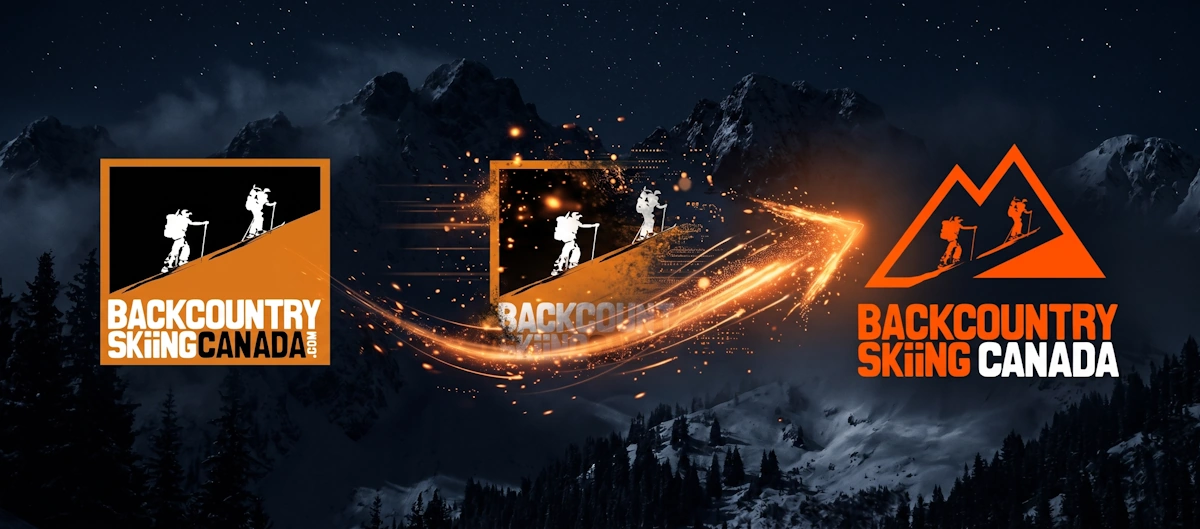
Did we mention we are doubling down on our history? Just a tweak to our original logo.
Where the Skin Track Began
When we broke trail back in 2009 in Nelson, B.C., our objective was straightforward: deliver honest, reliable route intel for the passionate community of ski tourers exploring the deep powder of the West Kootenays. By 2010, that mission took tangible shape with the publication of our first printed guidebook.
From those early tours up Kootenay Pass, the appetite for trusted mountain information exploded. We systematically expanded our route guides and deep-tier equipment reviews across the major mountain corridors of Western Canada:
Along the way, our community grew from a handful of dedicated local powder-hounds into a cross-country network of adventurers looking to push safely past the boundary ropes.
Navigating uncontrolled alpine terrain demands more than enthusiasm; it demands respect, preparation, and self-reliance. As the line between ski resorts and the wilderness blurs, we are codifying our editorial direction around The Four Pillars of Backcountry Skiing Canada:
Historically, our route archives leaned heavily toward seasoned veterans, with nearly 90% of our coverage focused on advanced terrain. We are actively shifting that balance. By introducing a rich library of moderate routes evaluated under ATES 1 (Simple) and ATES 2 (Challenging) categories, we’re providing a deliberate roadmap for skiers and riders transitioning from resort groomers to backcountry bowls. Paired with expanded "how-to" safety fundamentals—terrain assessment, tour planning, and route-finding—we want to ensure you are as mentally prepared as you are well-equipped.
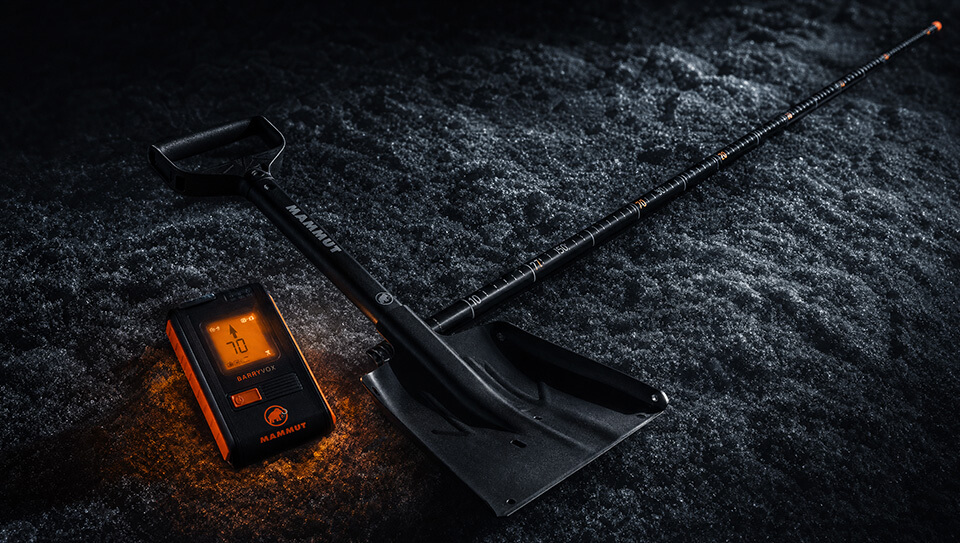
For us, the backcountry isn't just acreage on the other side of a rope line; it is an environment that requires a baseline of fitness, self-rescue readiness, and mountain sense. We exist to help you navigate that shift in mindset. Moving beyond the marked trail means taking full responsibility for your decisions, and our content will always emphasize the discipline and respect required to travel through unmanaged mountain hazards.
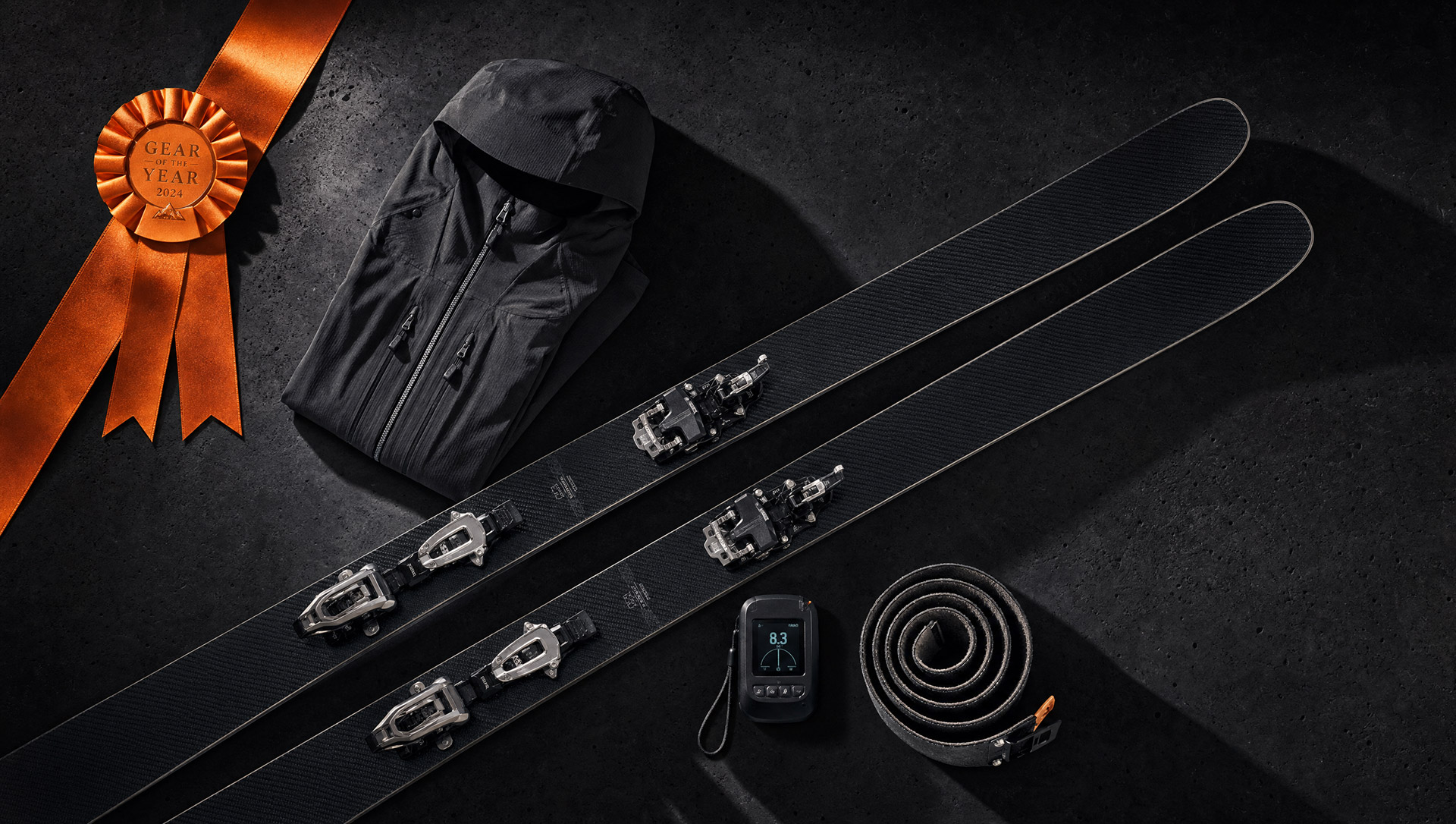
We don’t do vague gear lists or generic "top ten" roundups. Our review ethos is simple: the right tool for the job. A featherweight skimo setup designed for high-mileage spring traverses requires a fundamentally different review standard than a hard-charging freeride plank meant for pillow lines in the Monashees. We evaluate gear against specific mission profiles and snow climates, and we’re partnering with industry leaders to deliver clear, objective introductory guides so newcomers invest wisely from day one.
Whether you're breaking trail on touring skis or hiking alpine singletrack, terrain needs to be clearly and accurately graded. We are standardizing our route data across a three-tiered scale for both winter and three-season travel:
Year-Round Intel: Summer Transitions and Safety First
Mountains don't clock out when the snowpack finishes its spring melt—and neither do we. As part of this site redesign, we are extending our technical scrutiny into the summer months. Expect the exact same depth of independent product reviews, route beta, and mapping resources applied to alpine hiking, fastpacking, climbing, and ridgeline scrambles throughout Western Canada.
Crucially, we are deepening our editorial focus on mountain safety, decision-making, and hazard mitigation. While we are not a formal avalanche course provider, we believe continuous learning is non-negotiable. From tracking early-season faceted layers and atmospheric rivers to breaking down human-factor traps, our goal is to keep you informed before you step into your bindings.
Welcome to the New Season
The updated website gives our community a faster, cleaner, and mobile-ready platform—whether you're checking snowpack intel over morning coffee or pulling up digital route coordinates in your camper van at the trailhead.
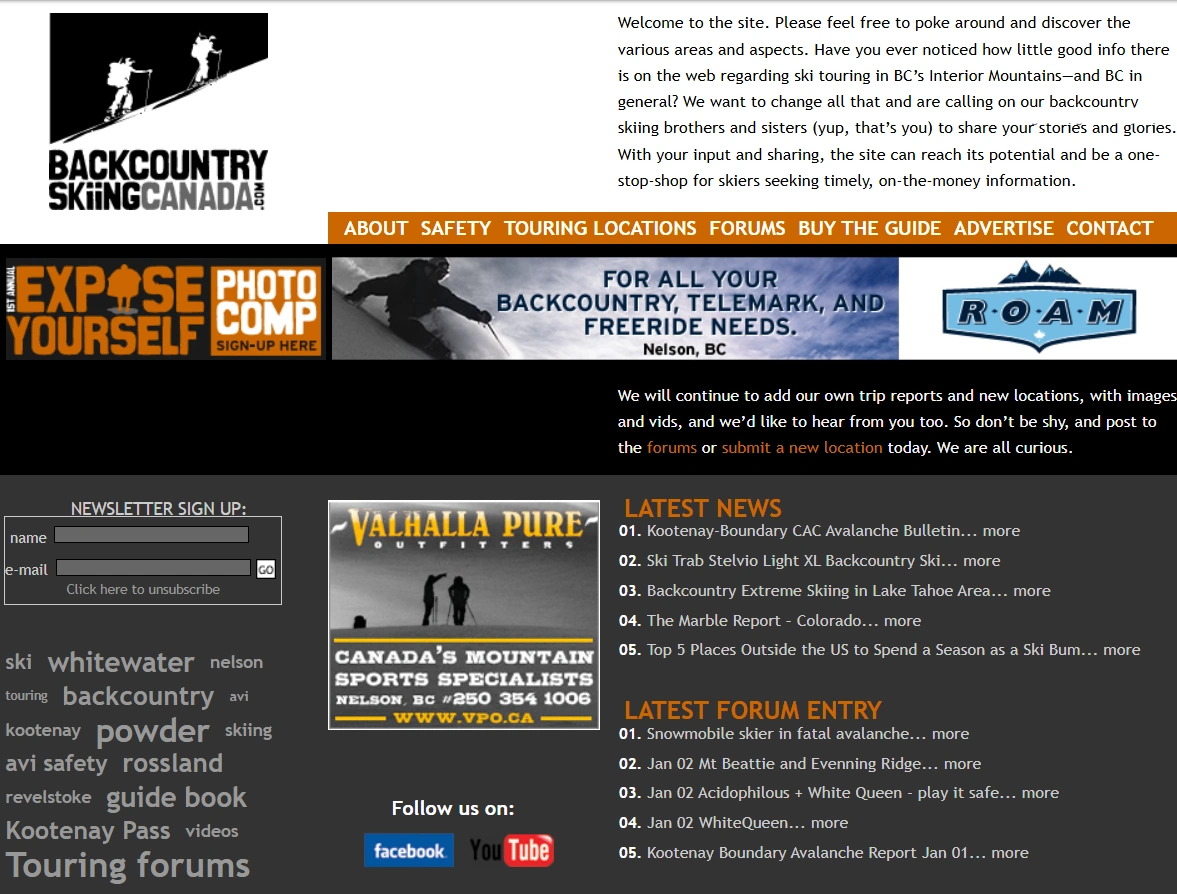
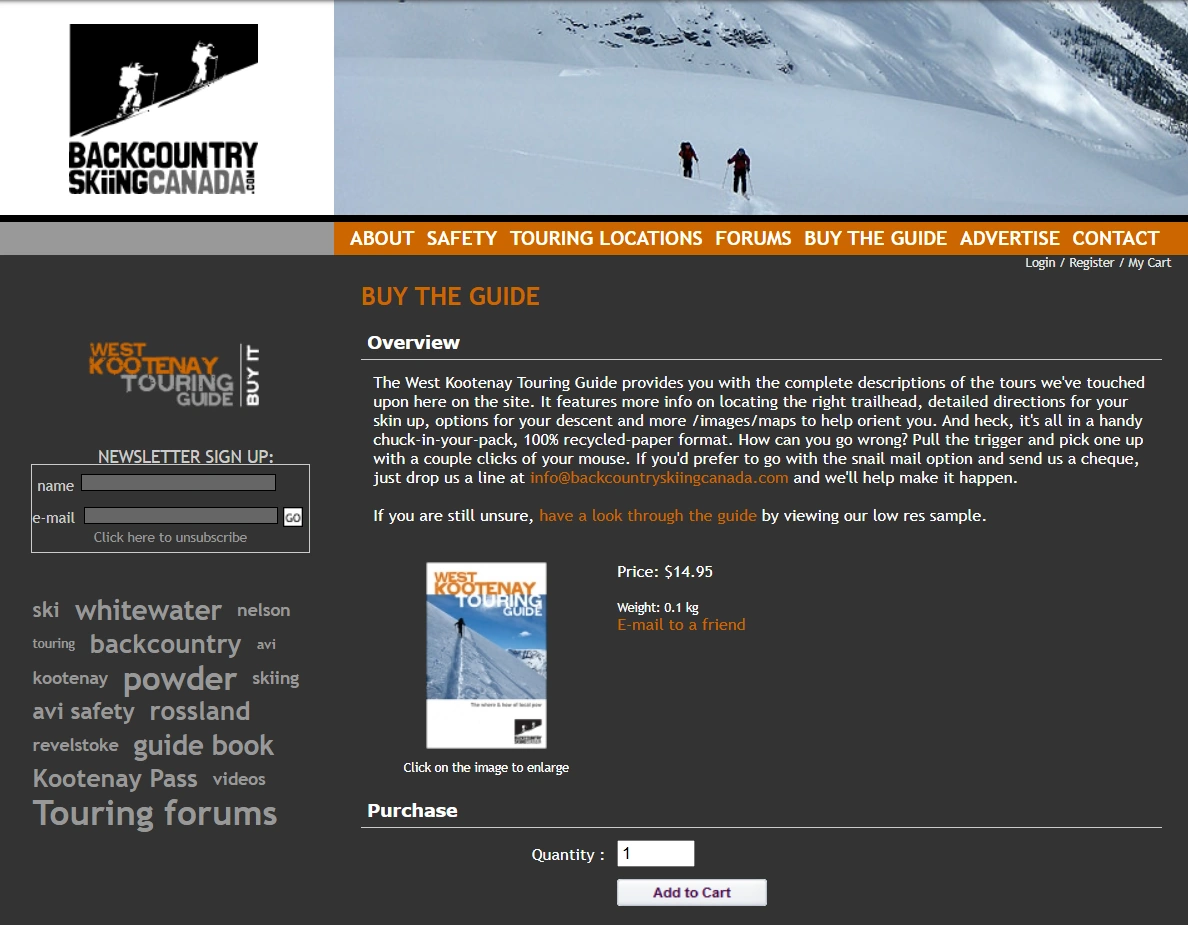
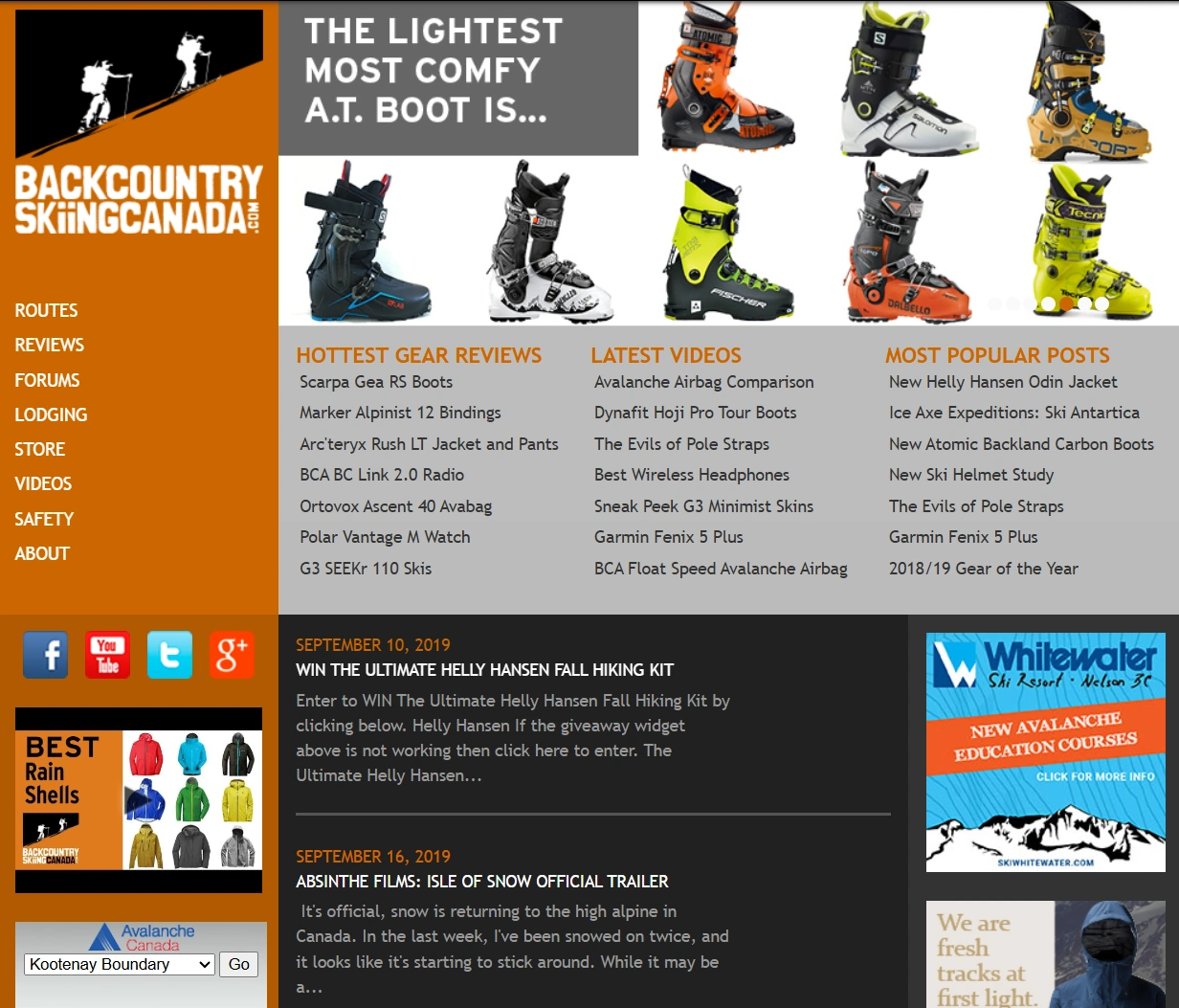
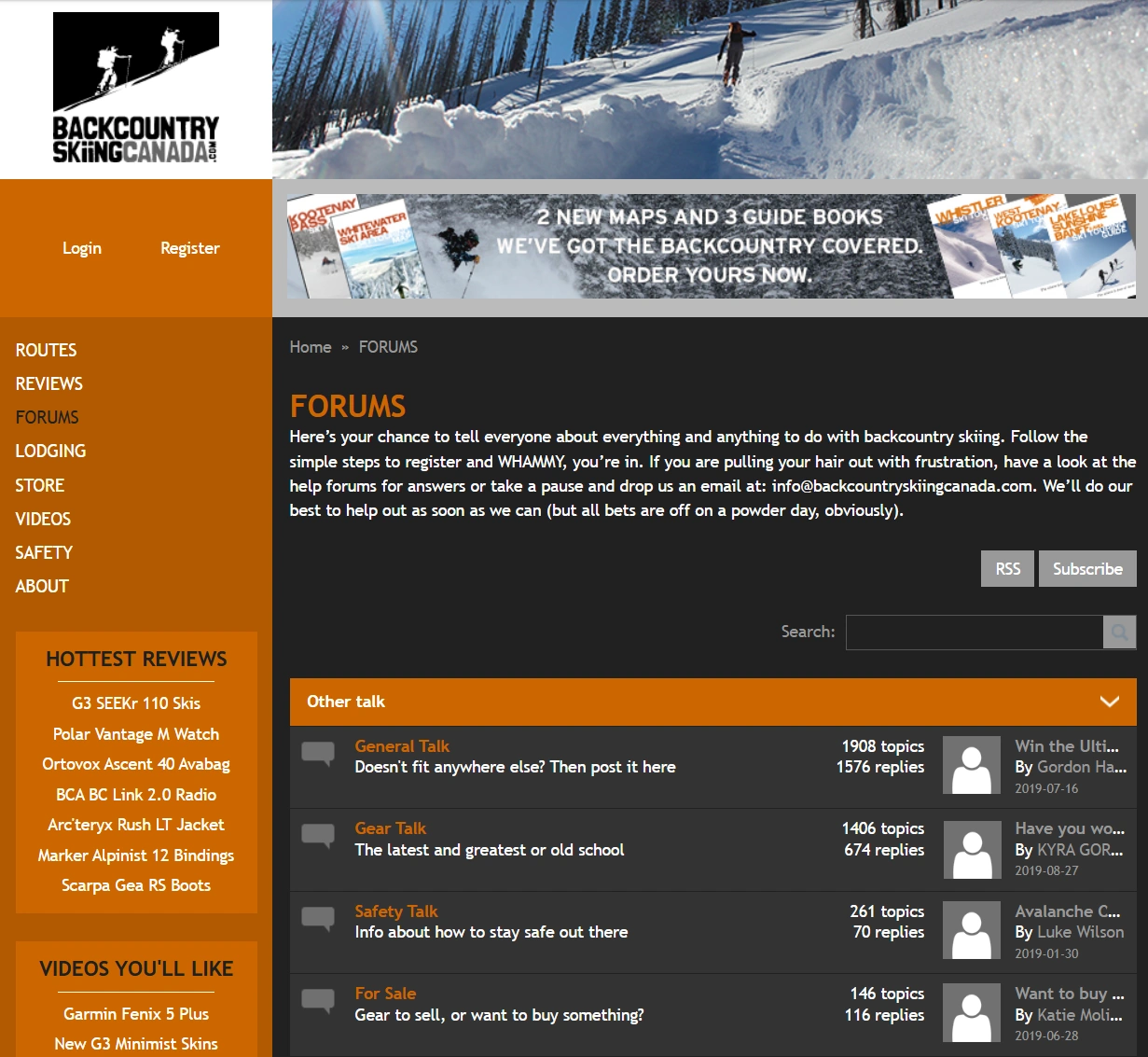
Explore the revised route directories, dive into the latest gear teardowns, and join us in the forums. As the snow piles up and the lines get filled in, we'll see you out on the skin track. In the mean-time we have pulled some archive images of the Backcountry Skiing Canada website through time.
When we broke trail back in 2009 in Nelson, B.C., our objective was straightforward: deliver honest, reliable route intel for the passionate community of ski tourers exploring the deep powder of the West Kootenays. By 2010, that mission took tangible shape with the publication of our first printed guidebook.
From those early tours up Kootenay Pass, the appetite for trusted mountain information exploded. We systematically expanded our route guides and deep-tier equipment reviews across the major mountain corridors of Western Canada:
- The Coastal Ranges: From the maritime powder pillows of the Sea-to-Sky to rugged coastal glaciers.
- The Columbia Mountains: Charting the storied tenure of the Monashees, Selkirks, and Purcells—including backcountry focal points like Rogers Pass.
- The Canadian Rockies: Unlocking high-alpine traverses, cold continental snowpacks, and technical objectives across Banff, Jasper, and Lake Louise.
Along the way, our community grew from a handful of dedicated local powder-hounds into a cross-country network of adventurers looking to push safely past the boundary ropes.
The Four Pillars: Our Standard for Every Route and Review
Navigating uncontrolled alpine terrain demands more than enthusiasm; it demands respect, preparation, and self-reliance. As the line between ski resorts and the wilderness blurs, we are codifying our editorial direction around The Four Pillars of Backcountry Skiing Canada:
1. Expert Guidance for All Levels
Historically, our route archives leaned heavily toward seasoned veterans, with nearly 90% of our coverage focused on advanced terrain. We are actively shifting that balance. By introducing a rich library of moderate routes evaluated under ATES 1 (Simple) and ATES 2 (Challenging) categories, we’re providing a deliberate roadmap for skiers and riders transitioning from resort groomers to backcountry bowls. Paired with expanded "how-to" safety fundamentals—terrain assessment, tour planning, and route-finding—we want to ensure you are as mentally prepared as you are well-equipped.
2. Defining the ‘Backcountry’
For us, the backcountry isn't just acreage on the other side of a rope line; it is an environment that requires a baseline of fitness, self-rescue readiness, and mountain sense. We exist to help you navigate that shift in mindset. Moving beyond the marked trail means taking full responsibility for your decisions, and our content will always emphasize the discipline and respect required to travel through unmanaged mountain hazards.
3. Purpose-Driven Product Authority
We don’t do vague gear lists or generic "top ten" roundups. Our review ethos is simple: the right tool for the job. A featherweight skimo setup designed for high-mileage spring traverses requires a fundamentally different review standard than a hard-charging freeride plank meant for pillow lines in the Monashees. We evaluate gear against specific mission profiles and snow climates, and we’re partnering with industry leaders to deliver clear, objective introductory guides so newcomers invest wisely from day one.
4. Balanced Terrain & Navigation
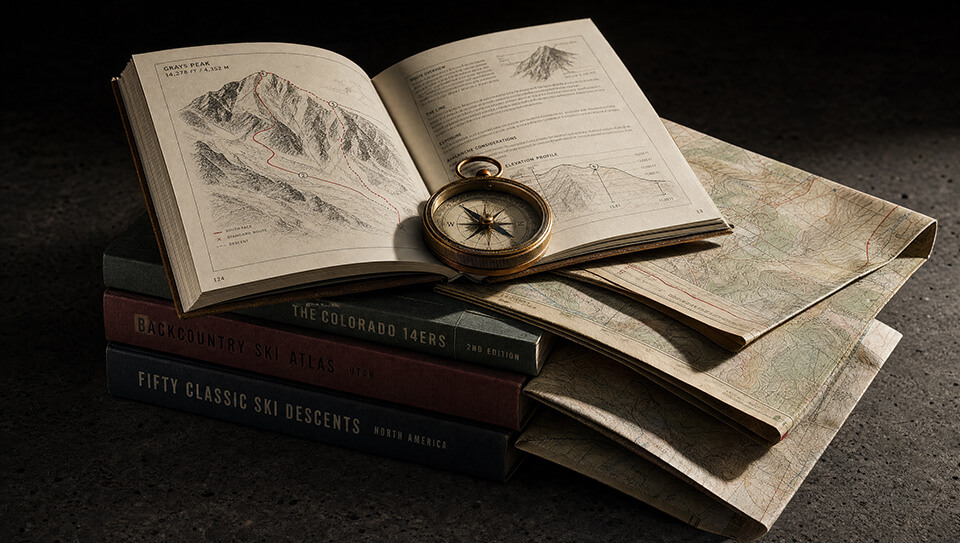
Whether you're breaking trail on touring skis or hiking alpine singletrack, terrain needs to be clearly and accurately graded. We are standardizing our route data across a three-tiered scale for both winter and three-season travel:
- Simple (Green / ATES 1): Low-angle, non-avalanche or gentle terrain designed to build basic touring habits.
- Challenging (Blue / ATES 2): Demanding routes requiring active route-finding, group management, and intermediate terrain assessment.
- Complex (Black / ATES 3): High-exposure, technical alpine terrain intended strictly for seasoned experts with advanced avalanche and glacier travel training.
Year-Round Intel: Summer Transitions and Safety First
Mountains don't clock out when the snowpack finishes its spring melt—and neither do we. As part of this site redesign, we are extending our technical scrutiny into the summer months. Expect the exact same depth of independent product reviews, route beta, and mapping resources applied to alpine hiking, fastpacking, climbing, and ridgeline scrambles throughout Western Canada.
Crucially, we are deepening our editorial focus on mountain safety, decision-making, and hazard mitigation. While we are not a formal avalanche course provider, we believe continuous learning is non-negotiable. From tracking early-season faceted layers and atmospheric rivers to breaking down human-factor traps, our goal is to keep you informed before you step into your bindings.
Welcome to the New Season
The updated website gives our community a faster, cleaner, and mobile-ready platform—whether you're checking snowpack intel over morning coffee or pulling up digital route coordinates in your camper van at the trailhead.
Explore the revised route directories, dive into the latest gear teardowns, and join us in the forums. As the snow piles up and the lines get filled in, we'll see you out on the skin track. In the mean-time we have pulled some archive images of the Backcountry Skiing Canada website through time.